Thanksgiving can mean a long wait for kids who have already washed their hands and been told dinner will be ready soon. Give them a little work they can finish or a game they can start without help. Put the activity at a table away from hot dishes and busy kitchen traffic.
Set out two or three of these ideas
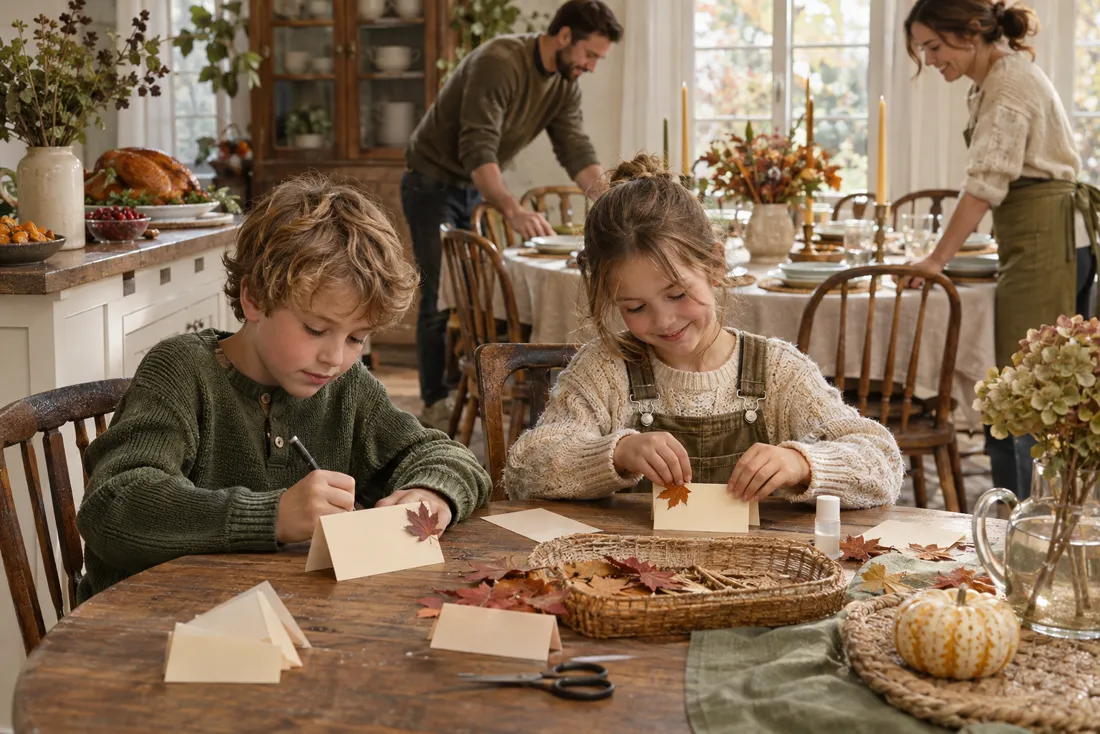
- Fold place cards. Give children paper and markers. Ask them to write each name or draw a symbol for the guest.
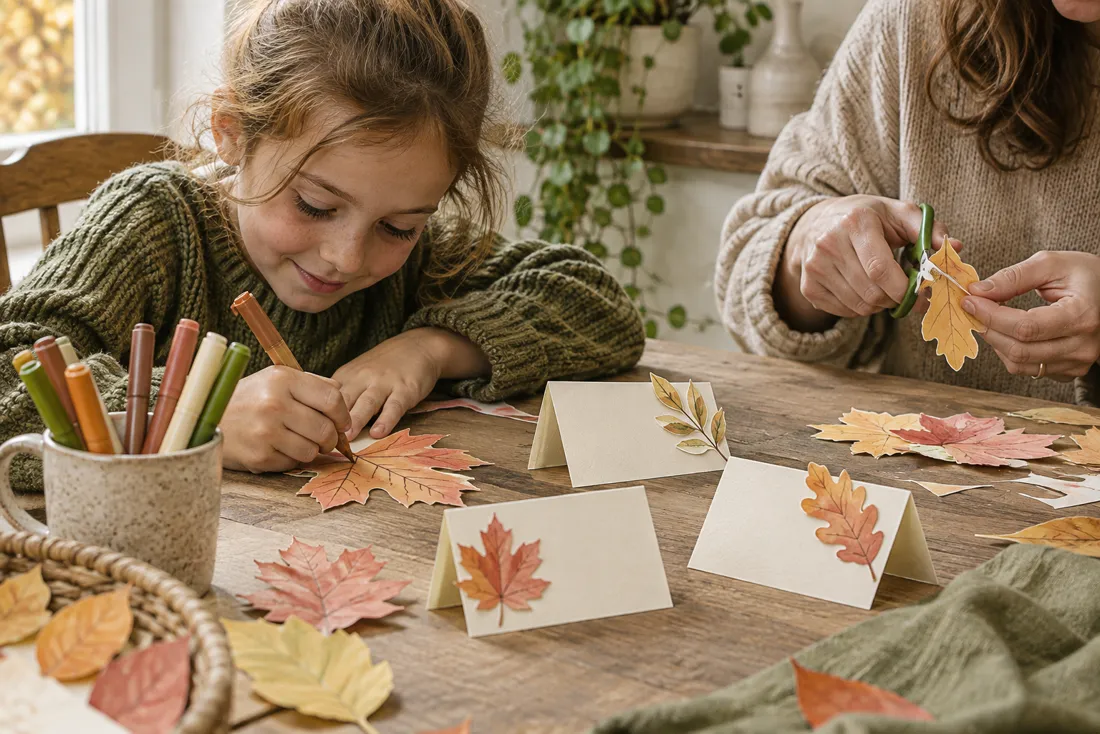
- Make a leaf picture. Use paper leaves or gather dry ones on a walk. Arrange them into a picture before gluing anything down.
- Draw the menu. Ask children to illustrate a few dishes. Let them choose where to put the finished menu.
- Write a thank-you note. Offer one prompt: “Thank you for helping with ___.” Children can give the note to someone before dessert.
- Play Thanksgiving categories. Take turns naming something orange, a food that starts with P, or a sound you hear in the kitchen.
- Create a guest interview. Give an older child two questions to ask a relative. They can share one answer with permission.
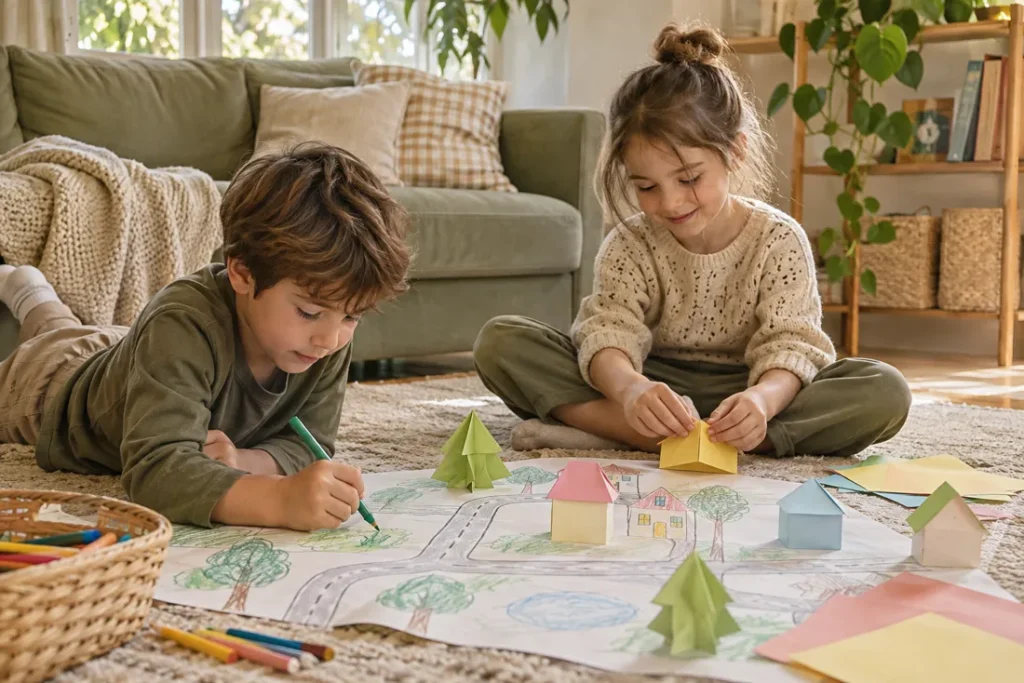
- Build a paper centerpiece. Fold scrap paper into little standing tents and draw something on each one. Move the pieces aside when food comes out.
Keep the supplies easy to clear
Put pencils and paper in one tray. Choose activities children can stop halfway through, especially when the meal is almost ready. If a child wants a job in the kitchen, ask an adult to give them a safe task, such as counting napkins. See How to Cook with Kids and Keep It Fun for ways to involve them on quieter days.
Prepare one table that can change jobs quickly
Choose a place where children can sit without being in the way of people carrying hot food. A corner of the dining table, a folding table, or a spot in the living room can work. Put the supplies in a shallow tray. Paper, washable markers, and a few envelopes will cover several of the activities. Leave a clear area for a child who wants to watch before choosing something to do.
Set out only what the first activity needs. If children are folding place cards, put the paper and markers where they can reach them. Keep glue and scissors with an adult or with an older child who knows how to use them safely. When dinner is near, collect any loose pieces in the tray and move it somewhere the children can find it later. This keeps the same table available for the meal.
Give the table a simple plan. Tell a child they can make a card, try a drawing, or bring someone over to help. Explain what they can choose independently and what requires asking first. If more guests arrive, invite the child to show them what the table is for. A clear starting point can make the activity easier for a child who does not know everyone in the room.
Match the activity to the ages in the room
A younger child can draw one symbol on a place card and ask an adult to add the name. They can match paper leaves by color or choose what to put on the pretend menu. Give them a smaller number of materials so the first decision is easy. A few cards and two colors are enough to start, with more supplies available if they want to keep going.
School-age children may enjoy an assignment that has an audience. Ask them to make a menu for guests to see or set out place cards after checking where people will sit. Older children can write interview questions and decide how to invite someone to answer. If they want to make something for the whole table, agree where it can go without taking up room for serving dishes.
Mixed ages can work together when each child knows which part is theirs. One child can fold cards while another draws, or they can make separate pages that go together. If two children want the same job, divide it by guest or by table. Let each person finish their part without needing the other to work at the same speed. A project is easier to share when one child can stop while another keeps going.
Use a short activity when the kitchen is almost ready
When someone calls that dinner will be ready in five minutes, pick an activity with a clear ending. Ask children to find three colors in the room, fold the last place card, or name something that starts with the letter P. They can finish their turn and leave their work on the tray. If the meal takes longer, choose another round instead of opening a project that needs a full cleanup.
Make a list of useful jobs away from hot food. Children can count chairs, put paper napkins beside plates, or check whether someone needs a place for a coat. Give each child one task and show them where to start. Once they finish it, thank them and let them return to what they were doing. They can choose to offer another bit of help if they want.
If the wait gets longer than expected, tell children what is happening and give them a new option. “The rolls need more time. Let’s try two rounds of categories or save your seat and take a short walk.” If someone has to stay indoors, they can play the same game nearby. Pick ideas that will still feel complete if an adult interrupts to say the food is ready.
Invite guests to join without putting anyone on the spot
For a guest interview, help a child write questions about a meal, a recipe, or something the person remembers doing when they were the child’s age. The child can ask a relative whether they would like to answer one question. Give the guest room to say yes, pass, or suggest a different memory. Children can take notes if the guest is comfortable with it, or simply listen.
If someone prefers to be quiet, offer a job that takes less conversation. They might sort colors, fold a card, or show a child how they draw a leaf. Guests who have never met can share an activity without needing to tell a personal story. A child can also make a card for someone who is absent and decide later whether they want to send it.
Keep thank-you notes specific and easy. A child might thank someone for bringing a favorite dish, helping them hang up a coat, or making space at the table. Ask the child where they want to leave the note. They can give it privately or put it by a plate. If a child has no one in mind, offer paper for a drawing and let them decide what to make.
Set aside one option for a quieter part of the day
Some children enjoy a gathering in short stretches. Put a small stack of paper and a book somewhere nearby where they can sit with a trusted adult. A child who wants time away from the busy room can finish a drawing there or take a few minutes with nothing planned. Let the child know where to find you if they want to come back to the group.
If weather allows, offer a brief walk with an adult. Give children one thing to notice, such as a leaf that changed color or a sound near the front door. They can bring that observation back to use in a drawing, or leave it as something they saw together. Keep the route short enough for anyone who needs to come back when the meal is served.
Have a way to pause the activity when guests need the space. A child can carry a book to another room or put their drawing in a folder. If the activity was shared with an adult, tell them when you can join again. It is easier to change rooms when the child knows their project has a place to wait.
Make the last five minutes easy to clean up
Before you start, tell children where finished work and reusable supplies go. When it is time to clear the table, give each child one small job. One can collect markers while another takes the finished cards to their spots. Let children choose whether to keep paper projects, share them with a guest, or put them aside to finish after dessert.
After the gathering, ask what children liked enough to do another time. If they remember a particular drawing or conversation, set it aside with the date if they want to keep it. You can use the same idea at a later family meal with different paper or different guests. A successful activity is one that fit into the day and gave children something of their own to contribute.
Plan a second use for the projects children make
A paper menu can become a drawing to send to someone who could not come. A finished place card can be saved with a note about the guest who sat there. Ask a child which piece they want to keep and whether they would like to add the date. Let them decide what to do with the other pieces when the table needs to be cleared.
Children may want to use a project again at another family meal. A child can make a fresh menu with a dish they choose or help prepare place cards for a smaller gathering. Give them one new detail to work with and ask whether they want to lead the job this time. The activity can have a purpose even when it is only for one meal. Choose what to save together so the child can be proud of the work without having to keep every scrap of paper.