
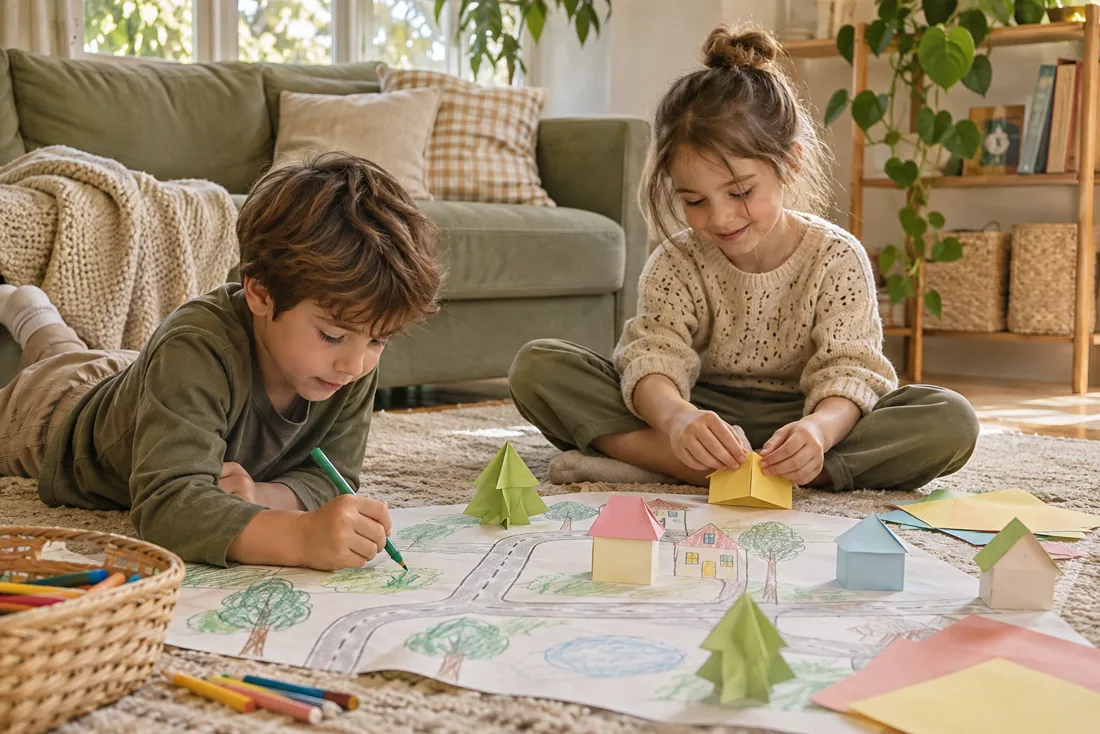
A spare fifteen minutes can feel long when a child is tired of the usual toys. Set out two choices and start one together if they need a hand. Most of these ideas use things you can return to their usual spot when play is over.
Start with paper
- Map a tiny neighborhood. Draw three streets on scrap paper. Add a park and invent an address for a toy.
- Make a folded picture. One person draws the top of a creature, folds the page, and passes it on. Open it after everyone has added a section.
- Write a mini menu. Pick a name for a pretend café and draw three things it serves. Take turns ordering.
Look around the room
- Find a color. Choose a color and see how many things you can spot without moving them.
- Set up a toy museum. Put three toys on a shelf and tell a visitor why each belongs there.
- Make a cloth trail. Arrange towels on a clear floor and invent places to visit along the path. Keep the activity on a surface where the towels won’t slide.
Step outside if you can
- Listen for three sounds. Sit near the door or walk to a quiet spot. Compare what each person heard.
- Draw what changed. Look at a familiar tree, plant, or window view and sketch one detail you hadn’t noticed before.
- Plan a five-minute tour. Let your child guide you around the yard or block and tell you about two stops.
For a longer outing, read Turning Ordinary Family Walks into Special Moments.
Pick a starting point based on the time you have
If you have ten minutes, choose an activity that begins with materials already in the room. A child can find three objects that match a color, draw a tiny map, or tell you which toy should go into a museum. Put a clear end on it before you start. You might say, “Let’s draw two streets before dinner,” or “We can look for five blue things while the water boils.” Children can add to what they started if there is more time later.
If you have half an hour, give a child room to make a plan. A neighborhood map can grow into a scene with buildings made out of scrap paper. A museum can include a short tour with someone acting as the guide. Ask what they want to make first and what they think they will need. The materials you already have can set useful limits. A bag of paper cups and pencils gives the child a place to begin without needing a trip to buy supplies.
When you have a longer afternoon, leave a stretch open for what the child discovers as they play. You can start outside and bring a drawing inside to finish later. Let the weather, a nap, or a friend arriving shape the day. Keep one quiet idea in reserve for the point when everyone needs a slower pace. You can pull it out when it helps rather than arranging activities for every moment.
Make the first step small enough to do together
For the folded picture, draw the first shape and hand over the pencil. Tell the child they can start by adding a line. For a pretend café, ask them to choose one thing they would put on the menu. If you want them to work on it while you do something else, sit together just long enough for them to see where to start. Tell them when you will come back to look.
If a child asks you to stay, see what kind of help they want. They may need someone to hold the paper while they fold it, or they may want company while they decide what to draw. Do that part together. Then you can leave them in charge of the next choice. If they call you back, ask what they have tried so far before you suggest another way to do it.
Let siblings make different versions. Two children can each draw a map and put the maps together when they finish. An older child may want to make a small legend, while a younger one draws a single house. They can decide how a visitor gets from one map to the other. Put each child in charge of their own paper so both have something they can change as they go.
Turn the toy museum into a longer activity
Give the child a shelf or a small table and invite them to choose three objects they can put back afterward. Ask which should be the first stop. They can make a simple sign for each object or remember what they want to tell visitors. Let them decide whether the museum is about favorite toys, things that make a sound, or a category they invent themselves.
When you take the tour, ask the sort of question you would ask if you had never seen the objects before. “How does this one move?” or “What makes this one different from the other two?” gives the guide room to share details. If a sibling wants to join, they can make a ticket or choose an object to add. Before anything gets moved, ask the first curator where it should go.
Finish with a choice about what stays out. If the child wants to keep the museum up, decide when you need the shelf back. They might draw the arrangement so they can set it up again. If they are ready to stop, ask them to return the objects in reverse order, starting with the last thing on the tour. Putting things away can be the final act of the activity.
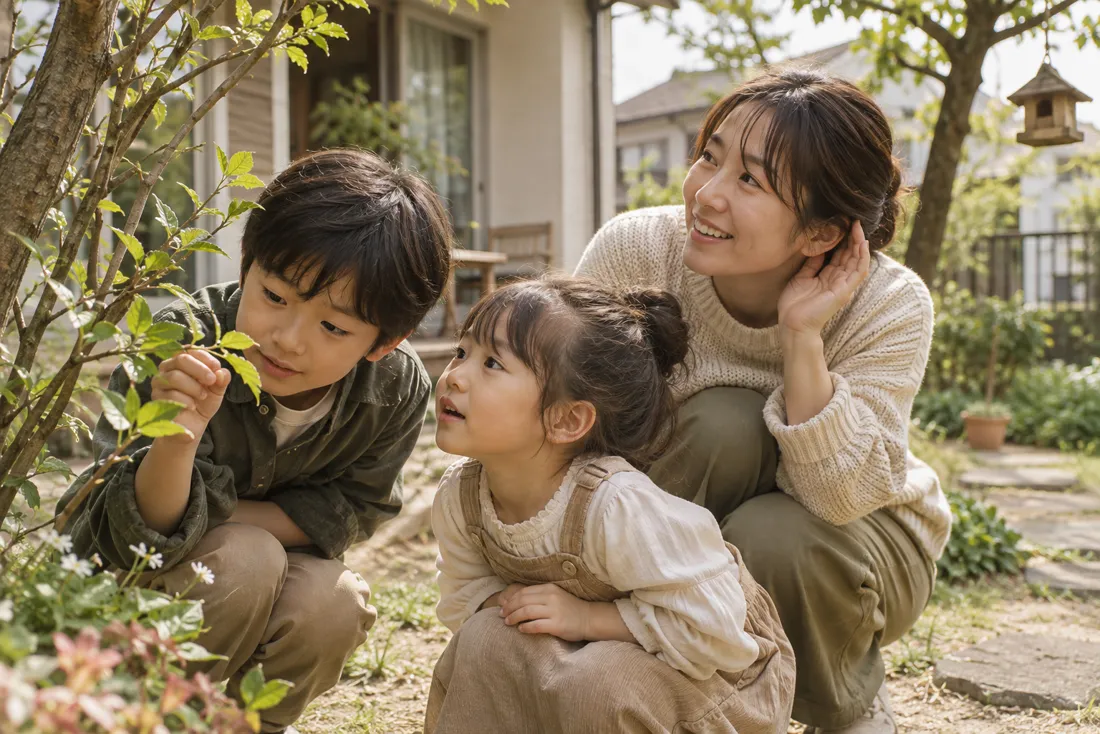
Use a walk as a chance to notice one thing
Choose a short route your child already knows. On the way out, ask them to listen for a sound they normally miss. You can stop at a corner and count how many different things you hear. If the street is busy, pick a spot well back from traffic or listen from a window instead. Let the child choose one sound to describe when you get home.
Try looking for a change. A plant that has lost a leaf or a puddle that has dried can give you something to talk about. Ask what the child remembers seeing yesterday. If they like drawing, bring a piece of paper or sketch what they noticed when you get home. You can put two sketches side by side another day to see what changed again.
A short walk can be enough. Give the child one choice, such as which direction to turn first or where to stop and look. If someone is tired, take the activity to the yard or front steps. You can repeat the same question in a familiar place and still hear a different answer. There is no need to fill the whole route with a list of things to find.
Set up activities a child can pause and come back to
Give unfinished work a place to go. A paper map can slide into a folder. A set of objects can wait on a tray if the family needs the table. If a project has pieces that may get lost, make a small envelope and ask the child to draw or write what is inside. Keeping the materials together makes it easier to pick up the work without beginning again.
Use the idea when you need to stop sooner than expected. Tell the child what is changing and give them one thing they can save. They might put a mark where the next road goes or take a last look at their museum before returning the toys. If you know when they can come back to it, tell them. If you are unsure, say when you can check with them.
The next time there is a quiet stretch, ask whether the child wants to finish the earlier project or start something different. If they do not feel like finishing it, let them keep the part they care about and recycle the rest. The activity has already given them time to explore an idea. Leaving some projects unfinished also makes room on the shelf for the ones they want to see through.
Keep a short list near the materials
Write down the two activities your child chose most often. Add one they can do on their own and one that works with siblings or an adult. Store the list with a few sheets of paper and pencils where they can reach them. When the next fifteen minutes opens up, point them to the list and ask which idea feels right for today.
If a child picks the same activity over and over, let them change one detail. A color hunt can become a shape hunt. A paper neighborhood can gain a river or a place to hide a tiny treasure. Ask what they want to try before you offer a new activity. A familiar idea can feel new when the child has a chance to decide what happens inside it.
Use what works when you’re away from home
Pick an activity that does not depend on having a table or carrying a bag of supplies. In a waiting room, a child can silently find shapes and show you where they are by pointing. On a bus ride, they can think of three things they would put in a pretend museum. If you have paper and a pencil, they can draw one stop from the trip. Choose the version that works for the people sharing the space.
If a child wants to make something larger when they get home, ask them to remember one detail they want to start with. You can put the idea in your bag on a small note or have them tell you when you reach the door. This gives them a way to continue the idea without needing materials on hand the moment it comes up.

