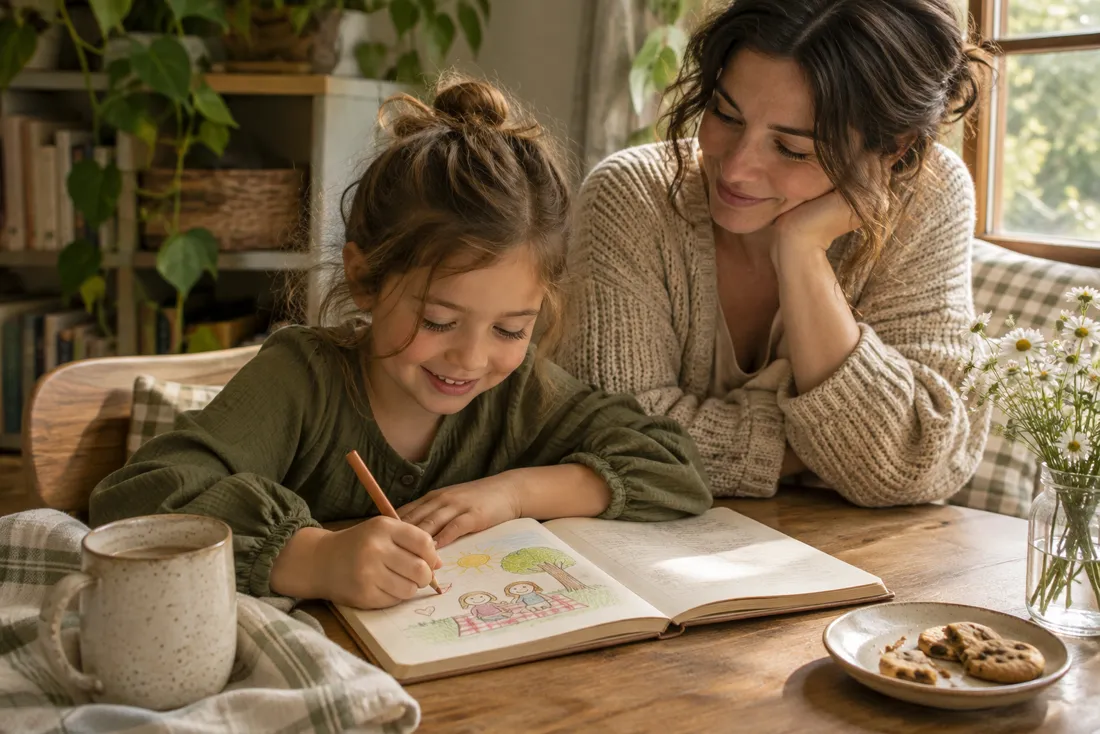
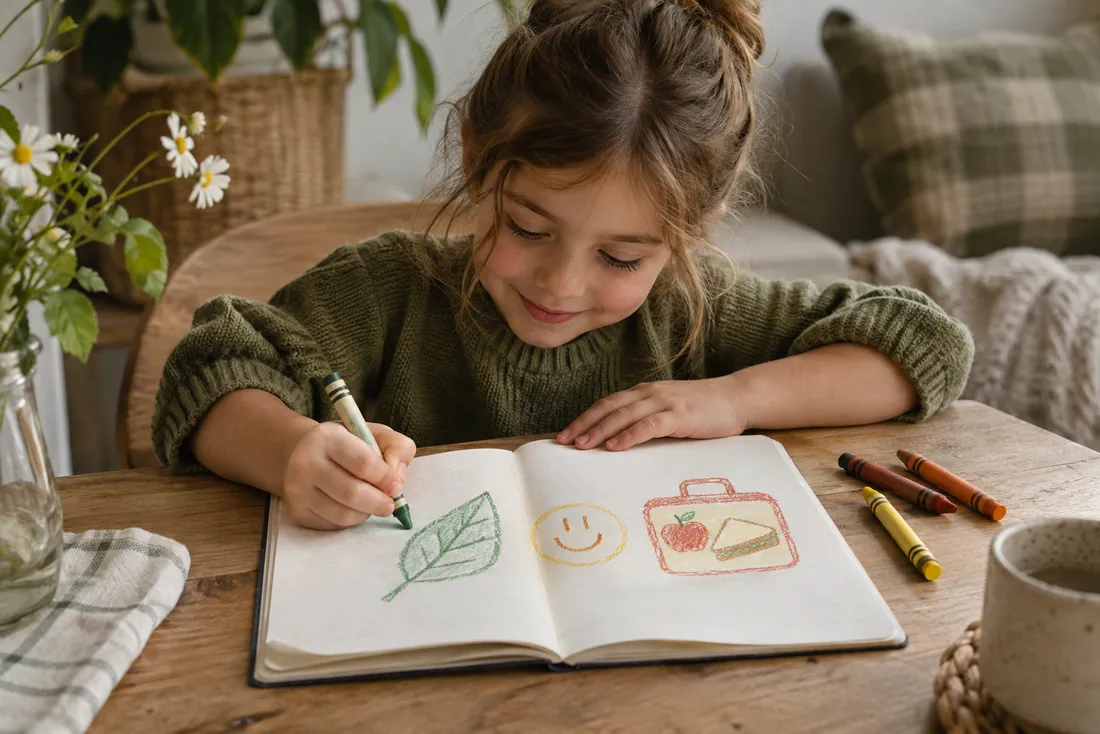
Hand your child a notebook and ask them to write what they’re grateful for, and they might look at you blankly. Ask them to draw something they were glad to find in their lunchbox, and they have a place to start. Concrete questions can help children tell the story of a small moment.
Try one of these seven prompts
- What made you smile before lunch?
- Who helped you do something today?
- What did you enjoy hearing or seeing outside?
- What’s one thing at home you were glad to use?
- What’s something you did with someone you love?
- What went a little better than you expected?
- What would you like to thank someone for tomorrow?
Offer a choice between writing, drawing, and telling. If a child tells you their answer, write it down in their words and ask if you got it right.
Make the journal easy to pick up again
Leave it near a place you already sit together. Add a date and one answer, then close the notebook when you’re done. Once a week is enough to get started. When you read back through it, notice small details, such as the name of the friend who shared a marker.
Make room for hard days
If your child had a rough day, give them time to talk about it. They can skip the prompt or answer a different question, like “Who could I ask for help tomorrow?” Families who pray together can offer a short thank-you or a prayer for someone they wrote about. See Finding God in Everyday Family Life for more ideas.
Show a child what a small entry looks like
Open the notebook and write about an ordinary moment from your own day. You might say, “I was glad someone held the door while I carried the groceries.” Add a detail you remember, such as the sound of the paper bag or the name of the person who helped. Let the child see how short the entry can be. If they want to choose a moment of their own, give them time to look back through the day.
Help them find a moment they can picture. You could ask what was on the table at breakfast, who sat nearby at lunch, or what they noticed while walking home. If they mention something that seems small to you, ask one question about it. They might have been glad to find an umbrella in the car because they got to walk through the rain without getting wet.
When you write down a child’s words, read them back slowly. A child may say “I was happy because Nora waited for me” and leave the reason there. Let them decide whether to add a detail. If they want to draw instead, ask where they would like the date to go and give the drawing room on the page. Their entry should look and sound like something they recognize as their own.
Give the same prompt different ways to answer
Ask “Who helped you today?” and let a younger child draw the person or point to a photo. An older child might prefer to write one sentence privately. Some children enjoy telling a story while someone else writes, especially if they have a lot to say. Ask permission to write it down and stop when the child tells you they are finished.
Offer a few starting words if a blank page feels too open. Try “I noticed,” “I liked when,” or “I appreciated.” Let a child choose the phrase that sounds like them. If they are thinking about a person, give them the option of keeping the entry in the notebook or using it as the start of a thank-you note. Decide together whether the note needs to be shared.
Change the prompt when it starts producing the same answer out of habit. A child who writes “my family” every week could be asked about a specific moment with someone at home. They might remember a sibling moving over on the couch or someone making a snack without being asked. The goal is to notice an experience they want to remember. There is room for an answer you would never have thought to put on a list.
Try a five-minute routine once a week
Pick a time when you already sit near each other. After Sunday breakfast might work because the table is clear and there is still time before you leave. Put the notebook and pencils in a spot you can reach. Choose one prompt and say whether you plan to write, draw, or tell your answer. If there are several children, let each choose how much to share.
Spend the first minute thinking or naming a moment. Give the next few minutes to putting it on the page. Use the last minute to date the entry or read it back if the child wants to hear it. Stop while the notebook still feels easy to use. A long entry can wait for a day when someone actually wants to keep writing.
If you miss a week, open to the next page and pick a question. The gaps tell you what kind of schedule your family had. You can add a note about a busy stretch if you want to remember it. Try leaving the notebook near the place where you will use it next rather than filling in a calendar. It is easier to come back to something when the materials are ready.
Give difficult feelings space alongside gratitude
If your child says nothing good happened, listen to the part they want to tell you about. They might have missed a friend or had a difficult time at school. Give them a chance to say what happened before offering another question. If they want to set the notebook aside, make a time to return to it when they feel ready or when the next week comes around.
Sometimes a child may want to write both things on one page. They could record that they were upset when a plan changed and glad someone sat with them afterward. Ask how they would like to describe it. Let them decide whether you write it down or keep the conversation between you. A journal can hold a memory of help without asking the child to describe the whole day as a good one.
Offer another kind of prompt if it would help. “What made today a little easier?” or “Who can we ask for help tomorrow?” gives a child room to answer honestly. If there is no answer yet, you can write the question and leave the space below it. Return later if they want to. Showing that you heard a difficult part of the day can be a complete use of the time you set aside.
Make it private enough for children to trust
Ask who can read the journal and agree on a place it can stay. A shared family notebook might be open to everyone at home. A personal journal can belong to the child, with a choice about which pages to share. Tell siblings when a book is private. If you want to show an entry to a relative, ask the child whose words are on the page before sharing it.
Think about whether everyone needs a separate notebook. A family that likes reading aloud together can use one shared page and sign each entry. Children who want a place of their own can keep a folded sheet or a small booklet in their room. You can still offer prompts while giving them the option to write alone.
If a child asks you to stop reading or recording their words, close the book and ask how they would like to use it next time. They may want to draw by themselves, hand you a page they are ready to share, or stop for a while. Keeping that choice in their hands makes it easier for them to talk openly when they do want to tell you something.
Revisit the entries when your child wants to remember
Choose an occasional time to open the notebook together. Look at the details rather than counting how many entries are there. You may find a drawing of a friend from school, a first attempt at cooking, or a bird your child used to watch from the window. Ask what the child remembers when they see it. They may have a new detail to add or a reason to keep the page just as it is.
If gratitude is part of your family’s faith, you can close with a simple thank-you prayer using words the child chooses. They might want to thank God for a person who helped or pray for someone who had a hard day. Give them time to speak or listen. The notebook can be a place to return to one ordinary moment, with enough room for the child to decide what that moment meant to them.
Give a child a prompt when they want more detail
If your child has written “I liked the walk,” ask whether they want to add one thing they saw or heard. A detail about a neighbor’s dog or the sound of leaves makes the entry easier to remember. They can add a sentence, draw in the margin, or leave the entry as it is. Ask about the details they want to keep before you suggest what seems interesting to you.
One way to make a shared entry is to leave a separate line for each person. A child might remember a dog that ran along the fence while a parent remembers getting home just before the rain. Both can go on the same page. If you read the entry together another day, ask whether they remember why they chose that moment. It can be fun to hear what another person noticed about an experience you shared without needing the two stories to match.