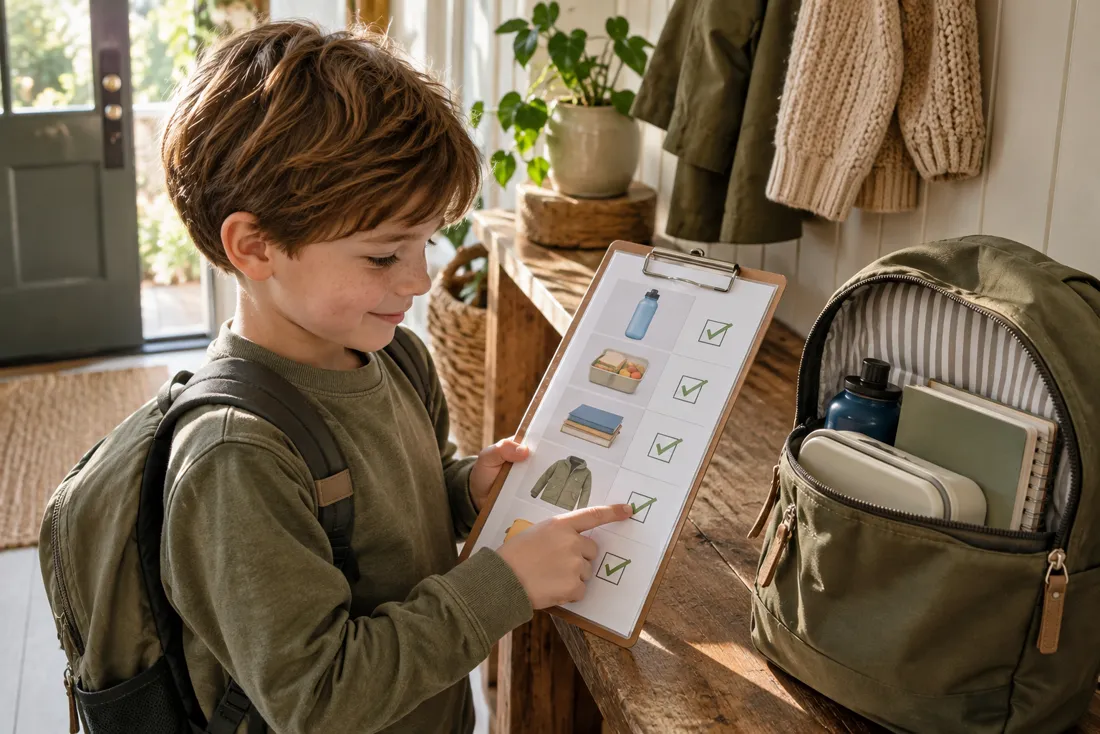
A morning routine checklist works best when a child can check it without asking what any of the words mean. Start with the jobs that need to happen before you leave. The list can live on the fridge, by the bedroom door, or wherever your child tends to stop and ask what’s next.
Put five steps on one page
- Get dressed, including socks.
- Eat breakfast and put the dish by the sink.
- Brush teeth and wash your face.
- Put your lunchbox and water bottle in your bag.
- Put on shoes and bring the bag to the door.
Move breakfast or brushing earlier if that suits your family. A child who can’t read yet can draw pictures for the five steps. For an older child, leave a line at the bottom for the one thing that changes, such as library books on Tuesday or a sports kit on Friday.
Practice at a time when you can be patient
Walk through the list together once on a quiet afternoon. Find out where the instructions assume too much. If “pack your bag” means finding a water bottle in the dishwasher and a lunchbox on the counter, put both in one place at night. Make the change to the room as well as the list.
Agree on a short version
For rushed mornings, circle the jobs you must finish before leaving. If you have a minute after school, ask which step took longest. A missing sock calls for a different fix than a breakfast nobody likes. Change one thing and see what happens the following morning.
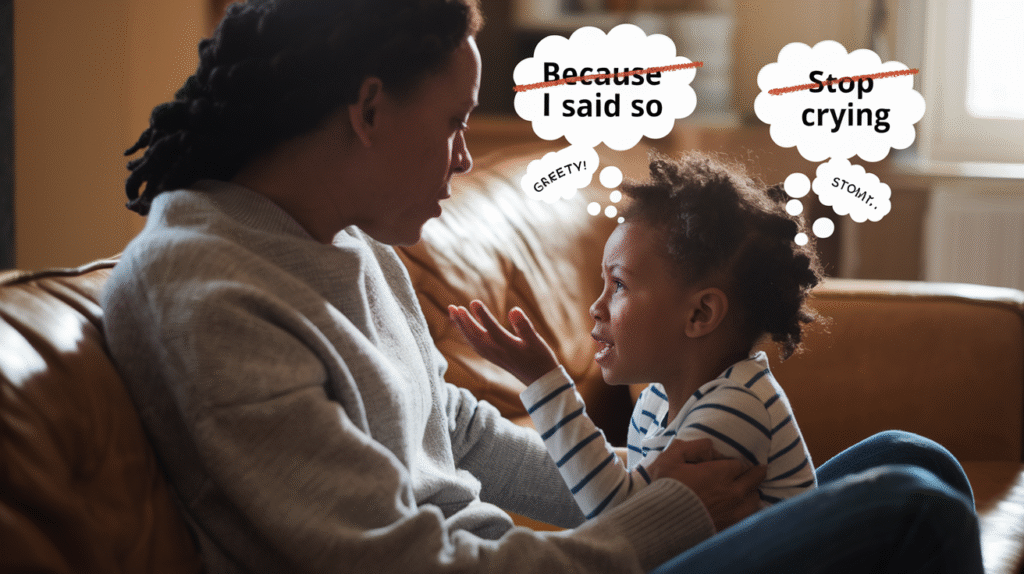
If your mornings tend to get tense, Connection Over Correction offers a way to think about your next reminder.
Build the checklist around your actual departure time
Start with the time you have to leave, then walk backward through the morning. If you need to be outside at 7:35, decide when shoes need to be on and how much time your child usually takes to eat. Use the time you have observed on an ordinary school day. If breakfast takes twenty minutes while everyone talks, a plan based on ten will feel rushed before you reach the second step.
Leave a little room for the things that happen once a week and sometimes twice in one morning. A bottle spills. Someone wants a different shirt. An assignment needs a signature. Add a buffer before the departure time and use it only when needed. If the morning goes smoothly, your child can spend those minutes looking at a book or talking with you at the door.
Put the checklist where the first action happens. If your child gets dressed in their room, try placing it at eye level near the clothes. If they walk straight to the kitchen, keep it where they will see it at breakfast. A second copy by the door can list only the items that must leave the house. Children should be able to tell where they are on the list by looking at it from the spot where they use it.
Give each age a version they can actually use
For a child who does not read yet, use a picture or small drawing for each job. A picture of their own shoes may be clearer than a generic icon. Use a short phrase as you point to it, such as “shoes by the door.” Let the child move a clip down the list or turn over one card when a job is finished. Practice the sequence once while you can both take your time.
A school-age child can use words and a small set of checkboxes. Write actions they can do without asking what you meant. “Water bottle in bag” is specific enough to check. “Get organized” might mean sorting homework, finding a jacket, or clearing breakfast dishes. If a child can do the task only when you open a cupboard or pour something, write that part into your own routine instead of expecting them to work around it.
Older children may prefer a short list in a planner or a note where they charge their phone. Invite them to choose the format and set their own reminder. Agree on the things you need to know before leaving, such as whether they have packed their lunch. If they ask for fewer reminders, decide together what will happen when they are running late. Agree on one check-in time rather than commenting on every missed step.
Set up the night before without creating another long routine
Choose two jobs that remove the most friction in the morning. Set out an outfit with socks, and put the bag by the door with any signed papers inside. Lunch may need to stay in the fridge overnight. Put a visual cue beside the bag so the person leaving remembers to take it. A reusable card that says “lunch in fridge” works even on a day when someone else handles school drop-off.
Use a short stop at the door after dinner or just before bedtime. Ask your child to look at the next day and tell you whether they need anything unusual. If it is library day, put the book in the bag. If the child will need a sports kit, give it a spot right beside the bag. When packing depends on something that is still in use, decide who will move it and at what point in the morning.
Check the layout of the rooms as you prepare. A child who keeps leaving their shoes upstairs may need a basket by the door. A bottle that disappears after washing can go in a single drying spot. These changes let the checklist point to objects your child can find on their own. You can make the list shorter once the room does more of the reminding for you.
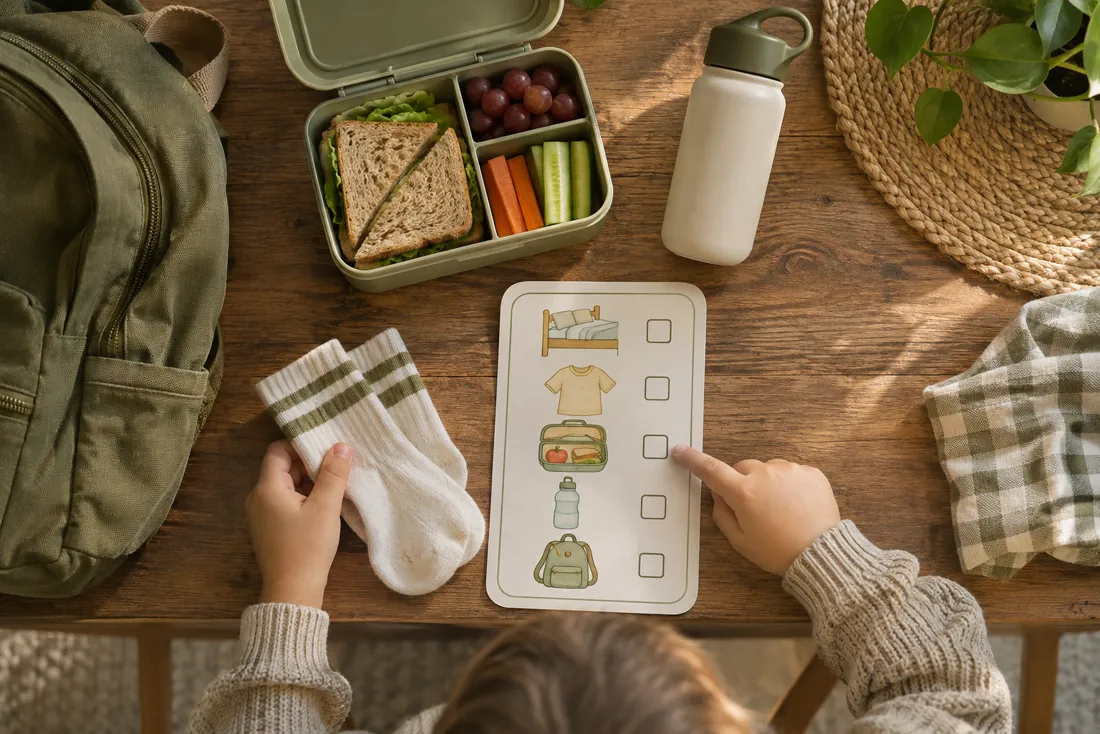
Walk through one ordinary school morning
Suppose you leave home at 7:35. Your child starts dressing around 6:55, eats at 7:05, and heads to the bathroom at 7:20. At 7:28, they check their bag and put on shoes. You might use a kitchen timer at 7:20 if the whole household tends to lose track of time. Keep the clock plan where adults can see it, while the child’s own checklist stays in the order they need to follow.
If the child wants a slow start, try doing the easiest step first. They may feel more ready to dress after they have had a sip of water or opened the curtains. If breakfast ends with sticky hands, move the face-washing step afterward. A checklist belongs to the people using it. Let the first week show you what order makes sense instead of changing every habit at once.
Decide what counts as a useful reminder. Pointing to the checklist may be enough when a child knows how to use it. When they get stuck, offer a concrete prompt such as “Look under the bench for the second shoe.” If a child is still learning a task, demonstrate it once and let them try while you are nearby. More independence comes from making one job easier to finish, then handing over the next one.
Use a short version on the mornings that go sideways
Agree in advance on the jobs you cannot leave out and the ones you can do later. If getting out the door is the priority, an adult can clear the dishes after drop-off. A child can grab the spare water bottle if their usual one is still in the dishwasher. Keep any food or clothing alternatives realistic for your household. Your child should know where the backups are and when it is okay to use them.
On a rushed morning, say the next step and give the child time to start it. “Shoes, then bag” is easier to hold in mind than a running explanation about how late everyone is. If a child is upset about a clothing change, offer two choices you can actually use. A few extra seconds to agree on a choice may save time you would spend returning to the same argument.
Review what happened later when you are both calmer. Ask where the morning first slowed down. If you were waiting for a bathroom, arrange a different order for siblings. If your child spent time looking for the right folder, set out the folder the night before. Make one change and give it another try. Write down what helped so you have a shorter path back to a workable morning next time.
A quick checklist to copy onto paper
Write “Dress, eat, brush, pack, shoes” down one side of the page. Add a picture to each line if needed. Under the list, write the time to be at the door and leave a blank line for the day’s extra item. Keep the wording short enough for your child to read at a glance. Have them read or point through the list with you once, then give it a real try the next morning.
At the end of the week, check which line nobody looks at and which line still needs help. You can remove an obvious step to make space for a useful one. A checklist that changes with a child is easier to keep using. Start with a version that fits tomorrow, then give it a place in the room where it can do its job.
If another adult handles a school morning, pass along the departure time and any item that is different that day. Your child can show them the list and explain where it lives. It helps to give someone else a morning they can follow without needing to know every habit in the house. On the next day you are together, ask the child how it went. They may have worked out a faster place to keep their shoes or found a picture that makes a step clearer. Let them decide whether to keep the improvement.