Your child drops a backpack in the hall and heads straight for the couch. You have a question about homework. They have a question about crackers. A workable after-school routine gives both questions a place, starting with the one you can answer while they take off their shoes.
Start with the same two things
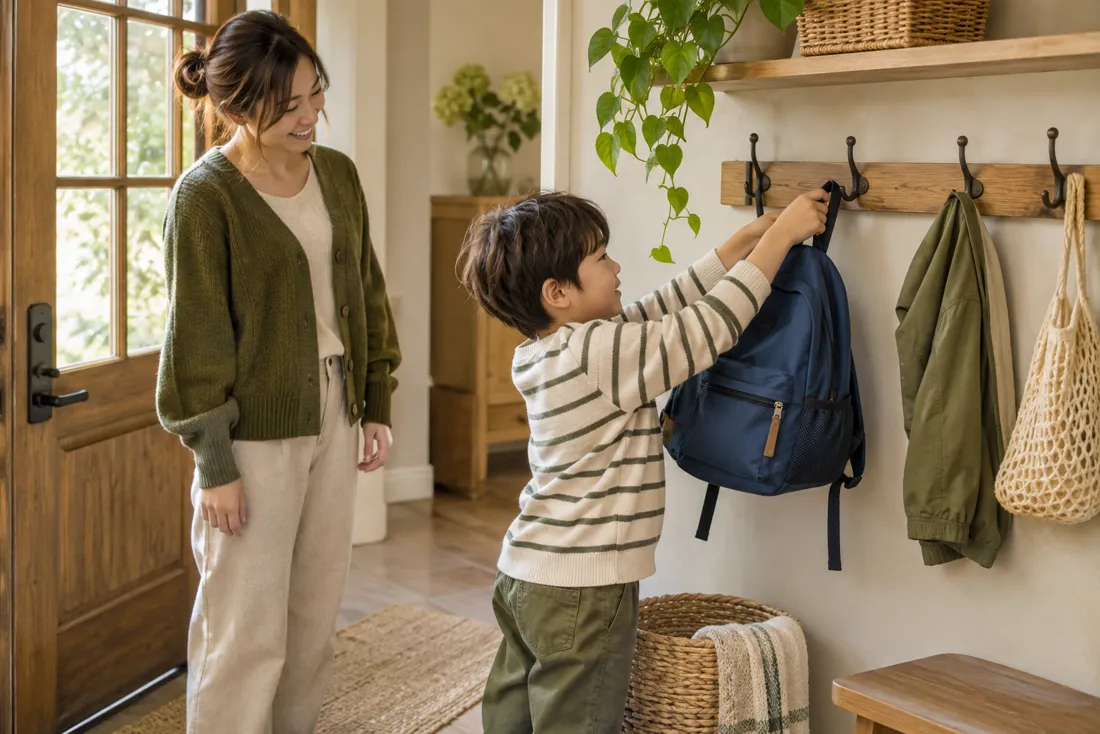
Give the backpack one place to land and put a snack within reach. An elementary schooler might hang their bag on a low hook and choose between yogurt and toast. An older child might empty their lunchbox and make their own snack. Keep questions short while everyone settles. “Do you want company or a few minutes?” gives your child a way to tell you what they need.
Make the reset visible
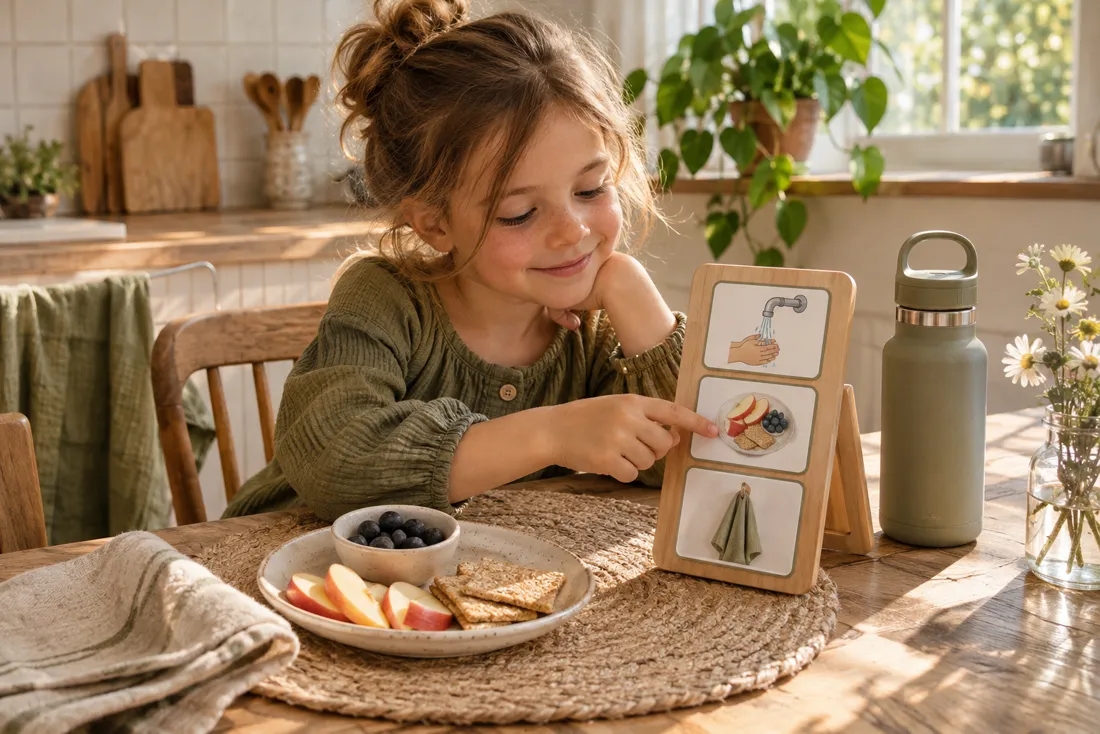
Write three steps on a scrap of paper: bag, snack, break. Agree on how the break will end, whether that’s a ten-minute timer or one lap around the block. If your child gets absorbed in a game and has trouble switching away from it, try a reset with a clearer stopping point. A puzzle you work on together for ten minutes is easier to pause when both people hear the timer.
Choose the next action together
Give your child a job they can see themselves finishing. “Find the worksheet and put it on the table” is easier to start than “Do your homework.” If there’s a practice or appointment, put the gear by the door during snack and decide together which school task can wait until after dinner.
Keep a shorter version for late pickups
On a day when you get home at dinnertime, the routine can shrink to putting the lunchbox by the sink and checking what needs to go back to school tomorrow. Pick it up again the next day. For more on talking through a tough transition, read Connection Over Correction.
Notice what happens before you walk through the door
If the first ten minutes at home always feel rushed, look at the ten minutes before them. A child who leaves school at three may spend forty minutes on a noisy bus. Another child may have to wait for a sibling at pickup while everyone around them is going home. They arrive at the same time on the clock with very different amounts of energy. The trip home can tell you more about where to start than the routine you had in mind that morning.
Ask one small question at a predictable point. At the bus stop, try “Would you like to walk quietly or tell me one thing?” In the car, you might offer water and put on familiar music. If a child begins to tell you a story, let them finish the part they wanted to tell. You can save follow-up questions for when you are settled. If they ask to talk later, follow through when you are both available instead of making them restart the conversation on the doorstep.
Make a plan for the days another adult does pickup. Share the two parts that matter most, such as the lunchbox spot and where to find the snack. A caregiver can use their own words and still give a child a recognizable start. If pickup time varies, use the order of events to guide the routine. A sequence such as snack, break, and check the bag can work at four o’clock or half past five.
A sample afternoon for a child who gets home at four
At 4:00, drop bags and put lunchboxes by the sink. A child who needs to change out of a uniform can do that while you slice fruit or set out whatever snack is ready. At 4:10, choose a brief break. A child might read on the couch, build with blocks, or sit outside with you. If a younger sibling wants a turn with the older child, give them a simple thing to do together or let each have a separate spot for a while.
At 4:25, check the backpack and choose the first task. If there are two worksheets, decide which one to open. Put a pencil and a piece of scrap paper beside it. If the child has a reading assignment, help them find the page and ask whether they want to read to you or have you sit nearby. You can set a time to check back rather than sitting through every question.
At 4:45, do a quick check of what remains. Move anything for tomorrow into the backpack or make a note that it needs a signature. If there is still work to finish, agree on the next time to sit down. On a day with no homework, the same check can be over in a minute. Afterward, leave a stretch of time that belongs to the child. Knowing when they will get that time can make the earlier steps easier to accept.
Give homework a place to begin and a place to end
Choose a spot that fits how your child actually works. The dining table may be easier than a bedroom desk if they want to ask occasional questions while you prepare food. A child who gets distracted by movement might prefer the end of the table facing away from the kitchen. Keep basic supplies nearby, then have the child point out which materials they need. If a worksheet repeatedly disappears under snack plates, give school papers a tray of their own.
Agree on what counts as finished for the day. It may mean completing a page, reading for the time the teacher asked for, or writing a note about a question the child could not answer. If you see a mistake, give them a chance to look over the work before you point to it. If they ask for help, try one example together and let them decide where to start the next one.
Some afternoons will turn up a task you cannot resolve at home. A missing instruction sheet or unclear online login can take over the evening. Write down the question in plain words and decide when to contact the teacher. Your child can help you explain what they tried. Once you have a next step, put the rest of the routine back in motion so one problem does not use all the time you had set aside.
Adapt it for a child who needs movement or quiet
Offer a reset the child can use without much setup. A child who needs movement might walk to the mailbox, shoot a few baskets, or put on a song and dance in a clear space. Another child may want to be left alone with a book. Start by offering two choices, then see whether the child comes back ready for the next thing. If a choice tends to stretch into an argument about stopping, choose something with a clearer end and talk through the reason.
At a small home with several children, quiet can be a shared agreement rather than a separate room. For a few minutes after school, an older sibling could use headphones while a younger one looks at books on the floor. If you need to talk to someone on the phone, tell children when you will be available. A short, predictable wait often works better than interrupting whatever each person is doing every time a new request comes up.
Check whether the break is in the right place. Some children prefer to handle the small school task first and take a longer break once it is off their mind. Let them try both orders on comparable days. Ask which version gave them more time to do what they wanted. Keep any steps that are essential, such as emptying a lunchbox, and move the rest around if a different order fits.
When siblings and activities pull the afternoon in different directions
Two children can use the same starting point and have different next steps. A younger child might need company while they unpack and an older child may want to eat on their own. Keep one place for bags and one visible list of departure times. Each child can have their own place to decompress. When only one adult is available, decide what needs an adult right away and what can wait until the next check-in.
For practice days, do one small bit of preparation before school. Put shoes, equipment, or a change of clothes by the door. After pickup, check the bag and make sure there is food and water for the trip. If you know the family will get home late, choose which homework task can reasonably wait and which needs to be handled earlier. Tell the child what you decided so they can put it on their own mental list.
Try a handoff plan for an unexpected change. If pickup runs late and you need to skip the usual break, say what is happening and when the child can get a few minutes to themselves. If dinner will be early, let everyone know while there is still time to wrap up what they started. A routine can bend without feeling like it disappeared when children know what took its place.
Try the routine for a week and revise one thing
On the first day, pick one part you already do and give it a consistent place. On the second day, see whether the child remembers it without a reminder. If they do, let them finish it in their own way. If they forget, make the cue easier to notice. A bag hook by the door is more useful than a perfect chart you pass on the way to another room.
At the end of the week, ask the child what helped them settle in and what felt rushed. Share one thing you noticed, such as fewer questions about where the pencils went. Choose a change together. You might move homework later, stop using a timer that everyone dislikes, or put tomorrow’s lunchbox where it will be easier to see. Write the revised order in a few words and give it another week before adding more steps.
If you can only change one thing today, choose what happens just after your child gets home. Make that step easy for both of you. The rest can grow from afternoons you have actually lived through, with room for the late pickups, busy siblings, and unfinished stories that make each day a little different.