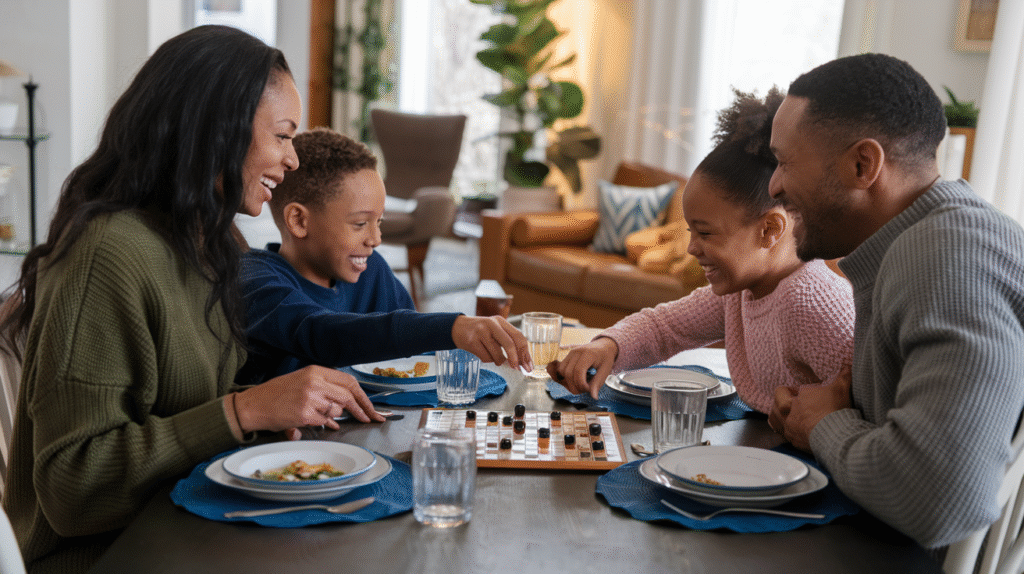
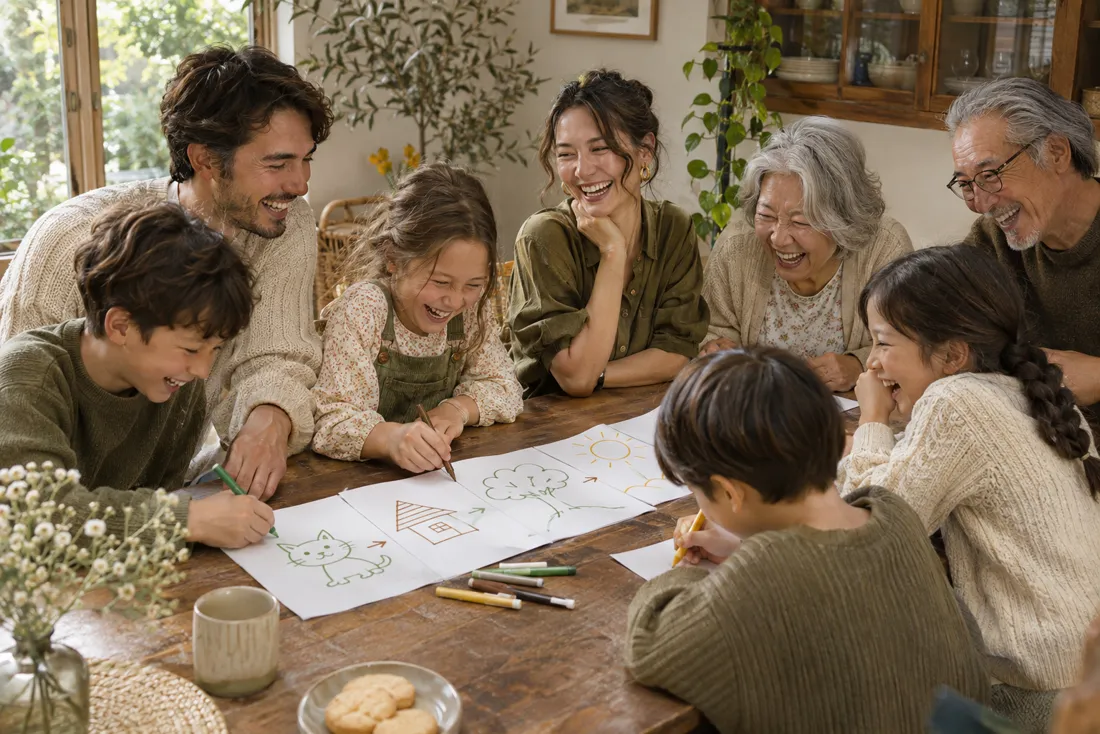
A family game night can start with one round while dinner finishes. Pick a game everyone can join, say how long you’ll play, and leave the next round up to the room. If an older child wants something harder, give them a rule to invent or a younger teammate to coach.
Choose a quick game
- Drawing relay. Each person adds one line to a picture, then passes it along. Give the finished drawing a name together.
- Mystery sound. One player makes a sound with an object while everyone else looks away. A zipper, spoon, or paper bag makes a good first clue.
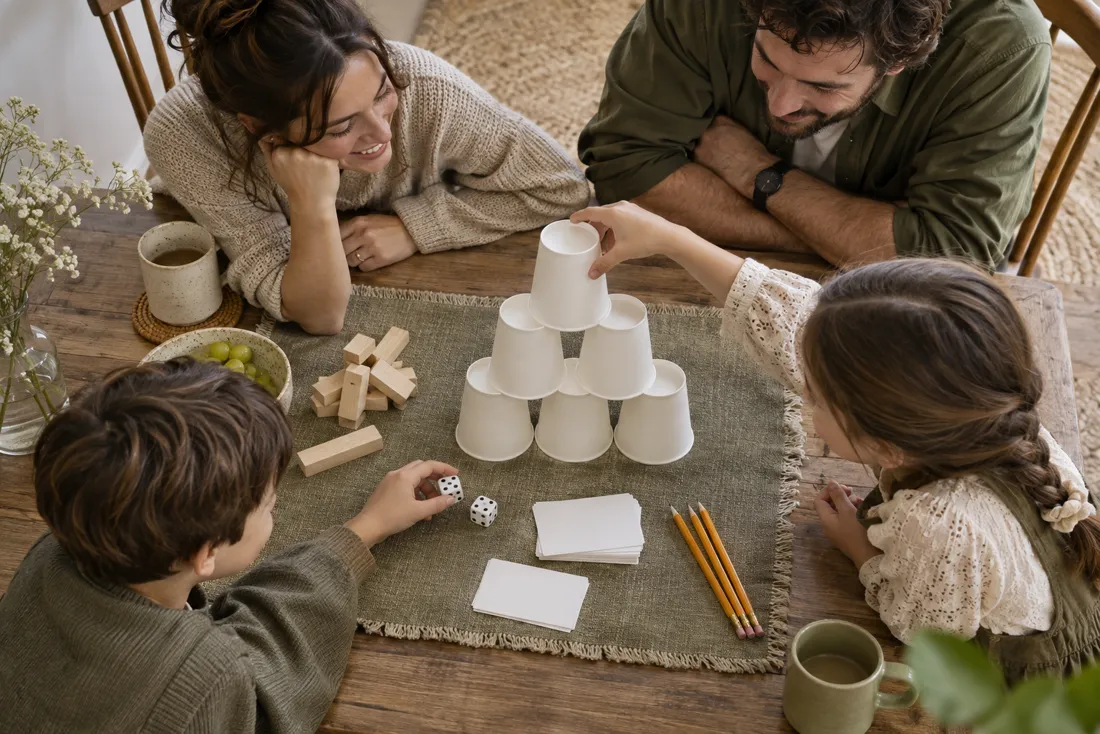
- Build from a bag. Give each pair the same handful of blocks or paper cups. See who can build a bridge that holds a spoon.
- Three clues. Think of something in the room and offer three clues. Younger children can point to the answer.
- Silly categories. Go around naming things a dragon might bring to school. Someone who gets stuck can ask the person next to them for help.
- Story swap. Start with “Someone left a tiny door open.” Each person adds one sentence until you find an ending.
- Team memory tray. Put six objects on a tray. Cover it, take one away, and ask the group to work out what’s missing.
Give everyone a role
A child who wants to watch can hold the timer or choose the next category. Pair siblings of different ages on team games and swap roles in the second round. If a game is frustrating someone, stop after the current turn and let them choose whether to try another.
If you’d rather play outside next time, explore outdoor family games.
Choose a game that fits the people who are here
Before you set out the supplies, ask what kind of evening people have in them. A child who has been sitting through a long day may like a game with movement. Someone who comes in tired might enjoy guessing a sound from the couch. If you only have fifteen minutes, pick a game with rounds that can end in a minute or two. Save a game with rules to learn for a night when everyone wants to take their time.
Look for a way to explain the first turn in one sentence. In the drawing relay, “Add one line and pass the paper” is enough. You can show what you mean by drawing a curve yourself. For the sound game, put three household objects where the person making the sound can reach them. Choose objects you can set back down without a long cleanup or a chance of breakage.
Let the youngest child take a practice turn with a partner. The partner can help hold the paper or remember the order without doing the guessing for them. Give a child who wants a challenge a job that makes the game interesting for everyone. They can invent a harder clue, try drawing with their other hand, or decide how to make a bridge span farther with the same materials.
Give the first twenty minutes a simple shape
Spend a couple of minutes collecting what you need. Put paper, pencils, and a timer on the table. Ask each person to choose a seat and tell the group how long you expect to play. You can choose a warm-up game that needs no supplies, such as naming what a dragon might pack for school, while someone finishes setting up. A short warm-up can help a child join without needing to learn the rules of two games at once.
Play one round of the main game and check how it feels. If the first round of the drawing relay takes five minutes, you can play a second with a different rule. Try passing the paper in the opposite direction or giving everyone a color. If the game ended quickly, give someone else a chance to choose what comes next. You can invite children to pick between two games so the decision stays manageable.
Leave a few minutes to wrap up. Ask which drawing, clue, or bridge people remember. Put the materials back together before anyone starts another round. If everyone wants to keep playing, agree on how much time you have. If one person has to leave, choose a place where the game can end cleanly and continue with fewer players only if the rules still work.
Adapt the rules for children who read at different levels
For a guessing game, swap written clues for drawings or objects. A child can choose a spoon for a sound, point to something that is the right color, or give a picture clue for a mystery object. If you use cards, have the person drawing a card whisper to an adult who can read it aloud when needed. This lets the younger child take the same turn as everyone else.
Older children may enjoy making the game more difficult. Ask them to write a clue that has two possible answers and let the group make a case for each. For a building challenge, ask them to find a way to use fewer cups without making the structure fall. Give them room to experiment, then ask whether they can explain the change to the person sitting beside them.
Choose roles with a reason to be there. A child who is keeping time can give a warning before the round ends. A scorekeeper can ask everyone to check the count together. If you are playing a team game, let children switch roles after each round. Avoid leaving the same person on the sidelines as a helper all evening. Ask whether they would like the next turn or prefer to stick with the role they chose.
Make room for competition without letting it take over
Decide whether you want a winner before the first round. You can play the memory tray as a team and see how many items the group notices together. If people enjoy keeping score, use a simple count and agree on how a tie works. Give the game a clear end. A child who is keeping track of the score can tell everyone when there is one round left.
If someone gets upset about a result, give them a moment and make sure they understand what happened. A disputed point may turn out to be a rule you forgot to explain. You can finish the round and decide what to do differently in the next one. If it is time to stop, give the child a way to leave without being asked to celebrate immediately. They can help pack up or take a short break.
Notice the parts of play that people want to repeat. An older sibling who gives a funny clue can help a younger one find a way into the game. A child who remembers the last item on a tray can lead the next round. Tell them what they did that made the game work. Over time, people can get better at giving clues, taking turns, or inviting someone else in, regardless of who wins.
Save one easy version for busy weeks
Keep a small bag with scrap paper, a pencil, a few cards, and a timer if you use one. Pick a place it can stay where children can find it. Add a note with the name of the game that worked best and the one rule everyone should remember. If you need something else, such as paper cups, write it on the note so you can collect it quickly.
Try a version you can play while waiting for dinner or after the table is cleared. Someone can choose three objects and ask the others to spot the missing one. You can tell a story around the room and stop when it has an ending. When the evening is crowded, a single round can be the whole game night. Save the longer versions for a day when they feel like something to look forward to.
Let the next game night grow from what people enjoyed
At the end of the night, ask one person what game they would choose again and another what they would change. A child might want a bigger piece of paper for the drawing relay. Someone else might want to work in pairs during the guessing game. Write down one idea and give it a try the next time you play. Keep the other ideas where the family can find them.
Give someone different a chance to lead the next round. They can pick a game from the list, show the first turn, and decide when it ends. Adults can help put the supplies out and let the child explain the part they know. If the rules change halfway through, ask the group to agree before the next round. The evening is easier to repeat when everyone gets some say in how the games go.
Give a visiting friend or relative an easy way to join
Choose a first game that everyone can watch for a turn before joining. In a drawing relay, pass the paper around once so a guest can see how people add to the drawing. For a guessing game, show how to give a clue and how to pass if someone is stuck. Tell the guest whether you are keeping score, then let them decide if they want to play the next round.
Set out materials that work for the people playing. Someone who struggles to see the small objects on a tray might prefer bigger ones with different shapes, and someone who wants to play without writing can choose a spoken role. Ask what would make it easier to join and give the person time to decide. You can play the same game in another way when the group is different. Keep the rules that create the fun and change the parts people need help with.