
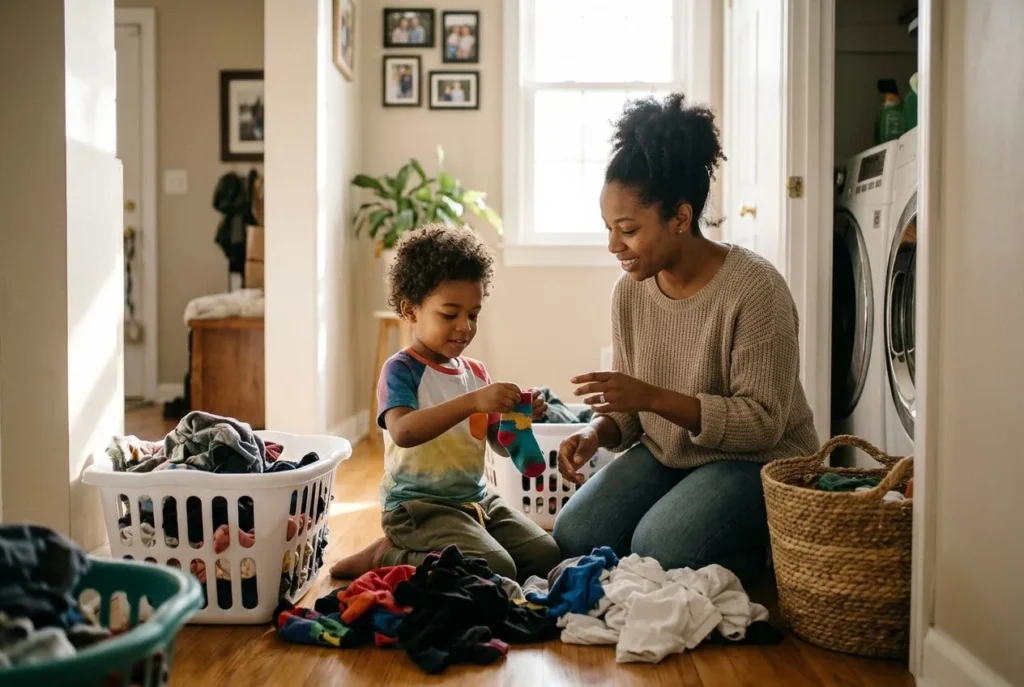
One of the most practical things you can do for your child’s future is teach them to contribute at home. Chores for kids by age are not about free labor or running a tight ship — they’re about raising capable people who know that families work together and that every person’s contribution matters.
This guide offers realistic, age-appropriate chore lists from toddlers through teenagers, advice on building a chore chart, honest thoughts on whether to pay kids for chores, and ideas for teaching responsibility without turning into a full-time nag.
Why Chores Matter More Than You Think
Children who do regular household tasks develop real-world skills they’ll use their entire lives: how to clean, how to cook, how to manage a space. But the deeper benefit is less obvious. When a child genuinely contributes to the household — not for pay, not because they were told ten times, but as a matter of course — they internalize something important: I am needed here. This family works because of me too.
That sense of belonging and competence is worth more than a spotless kitchen. It also builds the kind of quiet resilience that shows up years later, when they’re on their own and discover they actually know how to do things.
Chores for Kids by Age

Children’s abilities vary widely, and these lists are starting points, not strict requirements. Adjust for your child’s development, temperament, and your family’s specific situation.
Ages 2–3
Toddlers love to help — they just can’t do much independently yet. The goal at this age is participation and habit formation, not results. Keep expectations gentle and do tasks alongside them.
- Pick up toys and put them in a bin
- Put dirty clothes in the laundry basket
- Wipe up small spills with a cloth
- Carry light items (their plate to the counter, napkins to the table)
- Help put low-shelf groceries away
Ages 4–5
Preschoolers can handle more and are proud to do “big kid” tasks. Keep instructions simple, demonstrate first, and expect imperfect results with warmth.
- Make their bed (doesn’t have to look perfect)
- Help set and clear the table
- Feed a pet with supervision
- Water a plant
- Fold washcloths and pair socks
- Sort laundry by color or type
Ages 6–7
Early elementary kids can take on jobs with real outcomes. Visual reminders — a posted list or chart — help at this age more than repeated verbal reminders.
- Keep their bedroom tidy on a regular schedule
- Empty small trash cans around the house
- Sweep a floor or vacuum a small area
- Help with simple meal prep (washing produce, stirring)
- Wipe down bathroom sinks
- Pack their own school bag
Ages 8–9
Kids this age can handle multi-step tasks and start taking genuine ownership of a few regular responsibilities.
- Load and unload the dishwasher
- Fold and put away their own laundry
- Clean a bathroom with guidance
- Take out trash and recycling
- Rake leaves or help with yard work
- Prepare simple breakfasts or lunches
Ages 10–12
Tweens are ready for real responsibility and can handle most household tasks mostly independently. This is a good age to let them choose some of their responsibilities, which increases buy-in.
- Mop or vacuum a room fully
- Do a complete load of laundry, start to finish
- Cook a simple meal for the family
- Mow the lawn with supervision
- Grocery shop with a list (with a parent nearby)
- Deeper cleaning: scrubbing the tub, wiping down appliances
Teens (13 and Up)
Teenagers can handle almost any household task an adult can. The goal shifts from supervision to genuine shared responsibility. Treat them as partners in running the household.
- Cook full meals for the family on a regular rotation
- Manage their own laundry entirely
- Babysit younger siblings
- Handle yard work, car washing, or seasonal outdoor chores
- Run errands and help with grocery runs
- Take ownership of a specific area: the bathrooms, the kitchen clean-up, the vacuuming
How to Build a Chore Chart
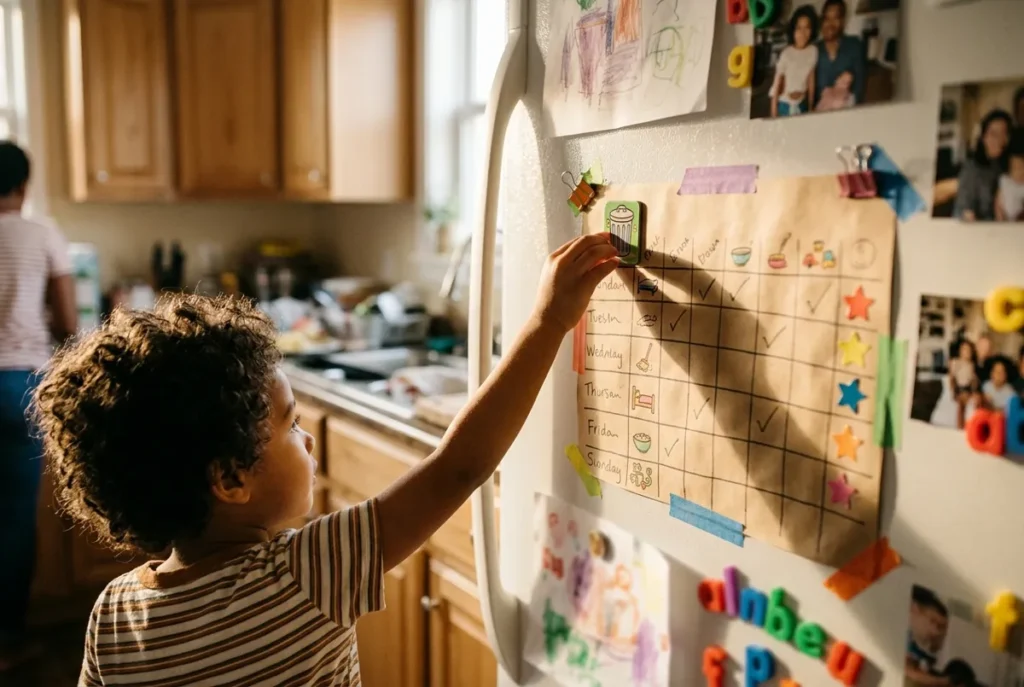
A chore chart’s main jobs are to remove the need for daily reminders and to give kids a visible sense of what’s expected and what’s done. It doesn’t have to be complicated.
Three options that work:
Paper chart. A printed or hand-drawn chart on the refrigerator, with checkboxes or sticker spots. No cost, easy to update, and satisfying to mark off. Works especially well for younger children who enjoy stickers.
Magnetic chart. A dry-erase board or magnetic chart lets kids move tiles to mark tasks complete. The hands-on element tends to work well for children who need a tactile prompt. The growing interest in magnetic chore charts reflects how much kids enjoy the physical aspect of moving something from “to do” to “done.”
Digital app. Several apps let families assign, track, and sometimes reward chores digitally. If your older kids are more motivated by screens than sticker charts, a digital chore chart can work well. Look for one with minimal ads and a clean interface.
Whatever format you choose, tie it to your weekly family rhythm. The family meeting agenda post has a simple format for reviewing responsibilities together each week — a five-minute check-in keeps chores on everyone’s radar without feeling like a lecture.
Should You Pay Kids for Chores?
This is one of the great parenting debates, and thoughtful parents land on both sides.
The case for paying: Connecting effort to money teaches kids how earnings work. It gives them practice managing small amounts before larger ones. If your goal includes building financial literacy, chore-based allowance is a reasonable tool. The Ultimate Guide to Raising Money-Smart Children explores this angle in depth.
The case against paying: Some parents believe household contributions are simply part of being a family member — not a service deserving wages. On this view, you don’t pay kids for dinner, so you don’t pay them for the dishes. The reward is belonging.
A middle path many families use: Basic household chores are expected of everyone because we’re a family. Extra “above and beyond” jobs — washing the car, organizing the garage, deep-cleaning the oven — can earn pay. This keeps the family-contribution ethic intact while giving kids a path to earn money when they want it.
There’s no single right answer. Choose the approach that fits your values and revisit it as your children grow.
Teaching Responsibility Without Constant Nagging

The goal is a child who does their chores without being reminded every single time. That takes consistent systems and patience — not more nagging.
A few things that actually help:
- Tie chores to existing routines. Tasks attached to an anchor point — before screens, before dinner, before leaving the house — are far easier to remember than tasks floating in open time. The morning routine checklist for kids shows how pairing tasks with a routine reduces friction for everyone.
- Train first, then expect. Do the task alongside your child several times before expecting independence. Many kids who “won’t do chores” have never been properly shown how. Demonstrate, then do it together, then supervise, then step back.
- Lower the standard, then raise it. A made bed that isn’t perfect is better than a child who gives up because they can’t meet an adult standard. Accept “good enough” and let the bar rise naturally over time.
- Connect over correct. When a child forgets or resists, curiosity works better than lectures. “What got in the way?” is more productive than “Why didn’t you do it?” For more on this approach, see connection over correction: a better way to raise kids.
- Be consistent more than intense. One calm, consistent expectation held every day matters more than occasional passionate enforcement followed by giving up.
FAQ
At what age should a child start doing chores?
Children can begin participating in simple tasks as young as two or three — picking up toys, carrying their plate, helping sort laundry. The key at this age is participation alongside a parent, not independent completion.
How many chores should a child have?
A manageable starting point is one to two daily tasks plus one or two weekly tasks. Add more as skills and habits develop. Overwhelming a child at the start is one of the fastest ways to build resistance.
What if my child refuses to do chores?
Refusal is normal, especially at first. Check whether the chore is truly age-appropriate, whether they know how to do it, and whether the expectation is consistent. Children generally meet the bar we hold steady — and drop it when we don’t.
Is a digital chore chart worth trying?
For many families, yes — especially with tweens and teens who respond well to apps. The best chore chart is the one your child actually engages with. If they prefer a sticker chart on the fridge, use that instead.
Final Thoughts
Chores are not a punishment or a performance. They are the daily practice of belonging to a family. When children contribute to the household, they learn that they are needed, capable, and responsible for more than just themselves. That is a gift that grows with them long after the dishes are put away.
For a broader look at raising kids with high expectations and genuine warmth, the gentle christian parenting post explores how to hold firm limits without losing the relationship.