

You want your kids to grow up knowing God. You’ve bought the devotional book, maybe more than one. But between homework, practices, dinner and bedtime, family devotions keep sliding to “tomorrow.” If that sounds familiar, take a deep breath: you are not failing. You just need a simpler plan.
This guide offers a realistic, ten-minute format for family devotions for kids, twelve easy ideas you can use tonight, and tips for keeping kids of different ages engaged.
What Family Devotions Are (and Aren’t)
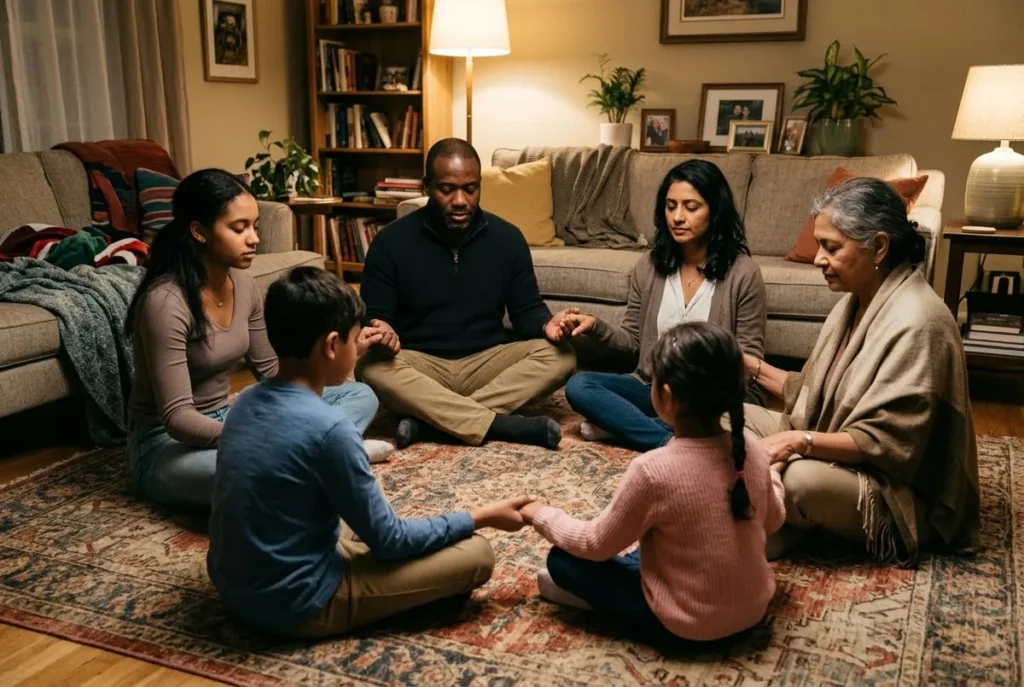
Family devotions are simply time set aside to turn your hearts toward God together. They are not:
- a mini church service with a sermon,
- a test of Bible knowledge,
- or something you have to do perfectly every single day.
At their best, devotions are short, warm and repeatable. A family that spends ten minutes together three nights a week will likely build more lasting faith than a family that attempts an hour once and gives up.
Why Devotions Matter for Busy Families
- They create a shared language of faith. Kids learn stories, words and ideas they’ll draw on for life.
- They open doors to real conversation. A simple question after a Bible story can lead to talks about friendship, fear or fairness.
- They model that faith is part of everyday life, not only something that happens on Sundays.
- They build belonging. Rituals tell children, “This is who our family is.”
For a broader look at weaving faith into ordinary days, read finding God in everyday family life.
The 10-Minute Devotion Format

Use this simple structure. It works for toddlers, teens and everyone in between.
- Gather (1 minute). Light a candle, sit on the couch or stay at the dinner table. A consistent signal tells kids, “Devotion time is starting.”
- Read (3 minutes). Read a short Bible passage, a story from a children’s Bible or one page of a devotional book.
- Talk (3 minutes). Ask one or two open questions: What stood out to you? Who in the story was brave? When have you felt like that?
- Pray (2 minutes). Thank God for one thing, and pray for one need.
- Bless (1 minute). End with a short blessing, a hug, a song or a high-five.
That’s it. On busy nights, shrink it to one verse, one question and one sentence of prayer. Something is always better than nothing.
12 Easy Family Devotional Ideas
1. Dinner-Table Devotions. You’re already together, so read a verse while everyone eats dessert. Pair it with ideas from our post on Sunday dinners and finding grace at the table.
2. One Verse a Week. Choose a short verse on Monday, write it on a sticky note on the bathroom mirror, and say it together each night. By Friday, everyone knows it by heart.
3. Story Bible Nights. Read through a children’s story Bible one story per night. Kids love seeing their progress through the book.
4. Gratitude Circle. Go around the room and name three things each person is thankful for, then close with a thank-you prayer.
5. Act It Out. Let kids act out the Bible story with costumes made from towels and blankets. Jonah, David and Goliath, and the Good Samaritan are favorites.
6. Draw the Story. Read a passage, then let everyone draw what they imagined. Share your pictures and talk about the details each person noticed.
7. Worship Music Night. Play one or two worship songs, dance or sing along, and talk about what the words mean.
8. Prayer Walk. Walk around your neighborhood and pray for each house, school or business you pass.
9. Question Jar. Let kids write down any question about God or the Bible. Pull one out each week and explore the answer together. It’s okay to say, “Let’s find out.”
10. Car Devotions. On the drive to school, read a verse from your phone and ask one question. Captive audience, no screens needed.
11. Serve and Reflect. Do a small act of service together, such as baking for a neighbor or writing a card, then read a verse about loving others and talk about how it felt.
12. Seasonal Devotions. Use Advent, Lent and Easter to add special rhythm. Our Advent activities for kids are an easy way to start in December.
Tips for Different Ages

Toddlers and preschoolers (2–5). Keep it to three to five minutes. Use picture Bibles, songs with hand motions and one-line prayers. Let them hold the book or blow out the candle.
Elementary kids (6–10). Give them jobs: reader, prayer leader, candle lighter. Use hands-on activities like drawing, acting and memory games. Ask “what would you do?” questions.
Tweens and teens (11–18). Move from teaching to discussing. Ask their opinions, connect passages to real issues (friendship, social media, fairness) and let them choose the reading. Respect honest doubts; they are a sign of a faith being made their own.
Mixed ages. Read the story at the youngest child’s level, then ask a deeper follow-up question for older kids. Older siblings often enjoy “teaching” the little ones.
How to Make Family Devotions Stick
Attach it to an existing habit. After dinner, before bedtime prayers or during breakfast. Habits stack best on top of routines you already have. (Bedtime families: see our list of bedtime prayers for kids.)
Lower the bar. Aim for three times a week, not seven. Celebrate consistency, not perfection.
Keep supplies in one place. A basket with a children’s Bible, a candle, a notebook and pencils removes friction.
Let it be fun. Laughter is allowed. A wiggly, giggly devotion is still a devotion.
Model it yourself. When kids see you reading Scripture or praying on your own, they learn it matters to you, not just to them.
Bring it into family meetings. If you hold a weekly family meeting, open or close it with a short devotion and prayer requests.
Common Obstacles (and What Helps)
“My kids won’t sit still.” Let them move: draw, build with blocks, or stand and act out the story. Attention spans grow with practice.
“We keep forgetting.” Set a phone reminder or tie it to a visible cue, like dessert or lighting a candle.
“I don’t know enough to answer their questions.” You don’t have to. Saying “I’m not sure; let’s look it up together” teaches humility and curiosity.
“My teen rolls their eyes.” Keep it short and real. Ask for their input and avoid lecturing. Sometimes a single honest conversation in the car means more than a formal devotion.
“My spouse isn’t on board.” Start with what you share, such as gratitude, kindness and service, and invite rather than insist.
FAQ
How long should family devotions be?
Five to fifteen minutes is ideal for most families. Shorter is better than skipping.
What’s the best time of day for devotions?
Whatever time your family is reliably together. For many, that’s dinner or bedtime; for others, breakfast or the drive to school.
Do we need a devotional book?
No. A children’s Bible and a few good questions are enough. Books can help, but they’re optional.
What if we miss a week?
Just start again. Grace applies to devotions too.
Final Thoughts
Family devotions don’t have to be long, polished or impressive. They just have to be real. Ten minutes of reading, talking and praying together, repeated over months and years, can shape your children’s hearts in ways you may never fully see. Pick one idea from this list, try it tonight, and let it become part of your family’s story.
For more encouragement, read how faith shapes the way we parent.