

In the weeks leading up to Christmas, choose one time when your family is already together. A few minutes after dinner or before Sunday breakfast is enough to make space for an Advent activity. Let children choose one idea to repeat and one to try when there’s time.
Make space for a short reflection
- Read a few verses. Start with Luke 1:26–38 and ask a child to tell you what they noticed. For younger children, read a short portion and invite them to draw one scene.
- Light a candle with an adult. Use an LED candle if you prefer. Share a short prayer for someone by name.
- Add a figure to a Nativity scene. Ask what the person might have heard or seen. A paper scene works if you don’t have a set.
- Sing one verse. Choose a song the children recognize or play a recording and listen together.
Give a child one act of kindness to choose
- Write a card. Let your child pick someone and name something they appreciate about them.
- Make a small household job a gift. Offer to set the table or put away books for someone who usually does it.
- Notice someone who might need company. Plan a call, visit, or greeting that works for both households.
If an activity feels rushed, keep the next one short. A repeated prayer or the same song each week gives children something familiar to join in with. For more ideas, see How to Teach Your Kids to Pray Without Pressure.
Pick a weekly rhythm your household can follow
Look at the next few weeks and choose a time when family members are already together. Sunday breakfast may work if everyone is home. Another family might use the first quiet evening of the week. Put one short activity on the calendar and give it a place in a part of the day people recognize. A familiar time makes it easier to return to an activity after a week with a crowded schedule.
Start with a five-minute version. You can read a few verses, ask one question, and let a child choose someone to pray for. If everyone wants to stay, you can spend more time talking or drawing. If there are bedtime jobs or another place to be, close the book and decide when you will open it again. Children can help return the materials to the same place for next time.
Keep a fallback activity in mind. On a week when people are away, sing a verse together or write a card at the kitchen table. You can return to a longer activity when people have time. If you miss the planned day, choose another moment or resume the next week. Make the plan easy enough to pick up again without needing to go through everything that was missed.
Read a short passage and give children room to wonder
Choose a few verses and read them slowly. If you begin with the passage about Mary in Luke, ask a child what they noticed or what surprised them. Give them time to answer. A child might ask what a person looked like or how someone knew what to say. You can look back at the passage together and see which details are there. If you are unsure about something, say you can look it up together later.
A younger child can draw one person or object they heard about. An older child might read the next verse or ask which detail everyone remembered. Children can use their own words to tell the story back. Listen for the part they are interested in before you move on to another question. This gives them space to spend time with a short passage without hurrying through a longer reading.
If you use a Nativity scene, add one figure and talk about the part of the story where they appear. Ask where the child wants to place the figure for now. You can make a simple paper scene or use objects you already have. At the next reading, return to the same scene and let a child show someone else what they set up before you add anything new.
Make candle time safe and simple
Use an LED candle if children want to handle the light or if the activity is near paper. Give the youngest child a job they can do safely, such as turning on the LED candle or setting the book on the table. If your family uses a real candle, let an adult handle the flame and keep the candle in sight on a stable surface away from decorations.
Choose a simple opening. You might say a line about waiting for Christmas or ask someone to read a sentence from the passage. Leave a moment of quiet before you decide whether to pray aloud. A child who wants to participate can name someone to pray for. A child who prefers to listen can sit with the family or draw quietly while others speak.
Agree on how you will finish. Someone can close the book, turn off the LED candle, or choose where to put the card you made. If a child has a question when the activity ends, set aside time to hear it. You can make the next reading shorter if people would rather talk longer. The weekly rhythm can make room for a conversation you did not expect.
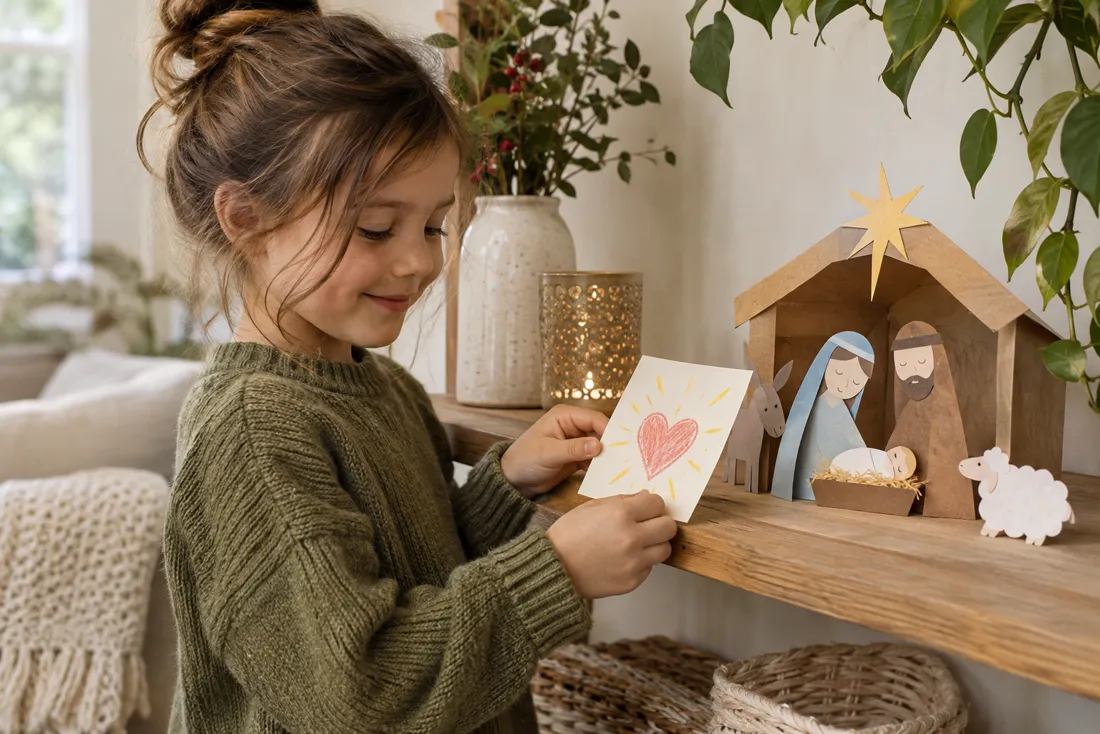
Let a child choose one act of kindness
Give children a few options they can actually do. They might make a card for a relative, help a sibling find something for school, or offer to set out napkins before dinner. Ask what would be helpful to the other person. A child might enjoy planning a big surprise, but the small task they can finish on their own may be the one that fits that week.
If the activity involves someone outside the household, decide how to ask what they would welcome. A relative may like a short call at a particular time. A neighbor might prefer a card left at the door. Let the child choose the drawing or words if they want to help make it. An adult can take care of arrangements that depend on schedules or permission.
Afterward, ask what the child noticed. They may remember how someone smiled when they received a card, or that a sibling wanted to help with the job too. Give them space to tell the story without asking them to repeat the same act the following week. If they want to choose another one, put two possibilities on a list and look at it next time.
Adapt the activities for different ages and schedules
Give younger children a short, concrete task. They can place one figure, draw a picture, or choose which song to hear. Tell them how long you expect to sit together. If they need to move after their turn, let them find a nearby place where they can still listen. An older child may want to select the reading, prepare a question, or choose an activity they can lead.
If one person arrives late, ask whether they want a short version when they get home. Someone can show them what was added to the Nativity scene or read one sentence from the passage. If they are too tired, let them catch up another day. Keep the activity visible enough that people can return to it when it works for them.
When people from different church traditions are together, explain the practice your family is using and invite people to participate in the way they feel comfortable. A child can ask why different families sing different songs or light candles on different days. Listen to what people know and make space for another person’s way of marking the season. A shared activity can begin with a story or prayer that everyone is welcome to hear.
Use a simple four-week plan as a starting point
The first week, read a short passage and make a paper figure. The second week, light an LED candle and pray for someone by name. The third week, let a child choose and complete a small act of kindness. The fourth week, sing one verse and talk about something your family wants to remember from the season. Adjust the order based on who will be there and what you have time to do.
Put the materials together in one place. A book, paper, pencils, and an LED candle can fit in a basket or drawer. Write a short note about what you tried each week if your family wants to remember it. When Christmas is close, ask children which activity they would like to do again next year. Let their answers guide what you keep and what you leave for another season.
Let older children lead part of the gathering
Ask an older child what they would feel comfortable leading. They might find a short reading, pick a song, or plan a kindness activity the household can do together. Give them the time you have available and help them choose a plan that fits it. If they want someone else to read aloud, let them ask that person ahead of time.
When the activity begins, let the child explain their own idea and give others a chance to take part. You can help if they forget where they marked the reading or need to shorten the plan. Afterward, ask what they liked about leading it and what they would change if they did it again. They may want to do the same part another week or hand it to a sibling. Give them room to take on a small responsibility without turning the activity into another assignment.