Think of one part of Thanksgiving your family already enjoys. Maybe it’s the walk before dinner or hearing a familiar story while someone sets out plates. You can build a tradition around that moment without adding another job to a full day.
Try a tradition before dinner
- Make one recipe note. Write who brought a dish and one detail about how they made it. Keep the note near the recipe for next year.
- Take a short walk. Choose a route that works for whoever wants to come. Agree on a turning point so someone with a dish in the oven knows when you’ll return.
- Send a greeting. Invite someone who can’t join to share a short message at a time that suits them. A card or recorded greeting works if a call would be hard to schedule.
Try a tradition at the table
- Ask one story question. “What do you remember about a meal at this age?” gives people something concrete to talk about. Anyone can pass.
- Write a sentence for next year. Add one memory to an envelope and read it the next time you gather. Younger children can draw a picture.
- Name a small kindness. Thank someone for a specific thing they did, such as bringing an extra chair or calling a relative on the way over.
Choose one idea and see if anyone asks to do it again next year. If the day is already full, a single thank-you can be your whole plan. Read Why Family Traditions Matter in the Digital Age for ways to keep rituals simple.
Start with the part of the day you already enjoy
Think about the moment when people naturally slow down. It may be a few minutes after the first guests arrive, the walk someone takes while a dish cooks, or the time when the plates have been cleared. That is a place to try a tradition because it already fits the day. If you choose a time that is usually crowded with tasks, make the new idea short enough to finish before something needs your attention.
Ask a few people what they remember about past meals. One person may talk about the food and another may remember who came early to help. Children might recall an activity adults barely noticed. Let those answers guide what you keep. A tradition has a better chance of lasting when it is tied to something people actually remember or look forward to doing again.
Try one idea this year. Give it a place and a time, then leave room for it to change. A short walk can become a look outside if it rains. A story question can move from dinner to a quieter part of the afternoon. Decide what you want people to get out of the moment, then make the practical details work for whoever is there.
Save a recipe in the words of the person who made it
Ask the person who brought a dish if they would like to share one detail about it. Maybe they use a particular pan, put an extra spoonful of something in, or learned a step from someone else. Write that detail next to the recipe or on a separate card with their name. You can keep the original card in the kitchen and make a copy for someone who wants to try the dish later.
Let children help with a part they can understand. They can draw the dish or write down what it looked like when it came out of the oven. An older child can ask which step took the longest or what the cook learned after making the recipe several times. If the answer is about a family memory, ask whether it is okay to include it on the card.
Give the recipe a place you can find next year. A folder near the cookbooks or an envelope in a drawer works if someone knows where to look. The next time you make the dish, read the note aloud if the person who shared it wants you to. A few words in their voice can bring back a part of the day that the list of ingredients would leave out.
Make a walk or a short visit fit different households
If your family likes getting outside, pick a route people can do in the time available. Let anyone who wants to walk farther know where the shorter group will turn back. Choose a meeting point that is easy to describe. If guests would rather stay inside, ask whether they would like someone to bring back a photo or tell them one thing they noticed along the way.
For someone who cannot come, ask how they would like to be included. They may prefer a short message over a scheduled call, especially if they are in a different time zone or working that day. Agree on who will get in touch and when. A child can make a card or draw the table if that feels more natural than talking to a group on a screen.
Consider a version that works in a small space. You can stand near an open door for a moment, take a short walk down the hall, or look out a window and name what has changed outside. Let the people who are there choose which version feels comfortable. The point of repeating an outing is the time together, so the route can change when the group changes.
Choose a table question people can answer in their own way
Try asking for a small detail. “What do you remember about a meal when you were this age?” gives someone a place to begin. Another question is, “Who taught you to make something you still cook?” People can tell a story, give a short answer, or pass. Let one person finish before you ask a follow-up question, and give children time to think of something they want to say.
If the story brings up someone who is absent or has died, follow the lead of the person telling it. Some families want to share a warm memory. Others prefer a moment of quiet and a change of subject. You can thank someone for sharing and give them space to decide whether to say more. A tradition can make room for whatever kind of year people have had.
Keep the question in a place that helps you remember to ask it. You might write it on a card near the napkins or share it with one person who wants to lead the conversation. If the table is too busy, ask at another point in the day or choose to skip it. The tradition is still available the next time people gather.
Put one memory in an envelope for next time
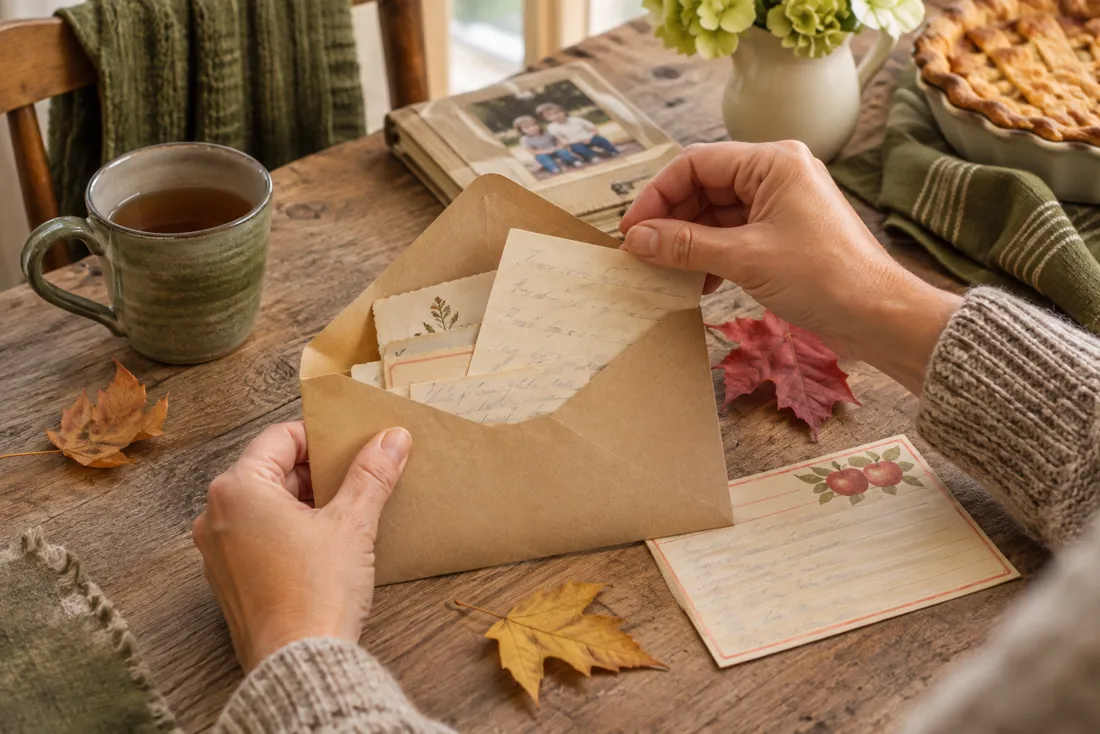
Set out a few scraps of paper and invite people to write a detail they want to remember. It might be a dish someone tried for the first time, a joke from the kitchen, or a visit that came as a surprise. Children can draw instead. Ask whether each person wants their note read aloud next year or kept private, and label it accordingly.
Write the year on the envelope and give it to someone who will be able to find it later. The next time you gather, open the notes people agreed to share. If the group is different, explain where the notes came from and invite newcomers to add something if they would like. You can keep the old notes together with the new ones or save only a few favorites.
If nobody wants to write during dinner, make a note after the guests leave. Ask the people still there which moment they would choose. A single sentence is plenty. You can add a detail about the room or the weather that will help bring the scene back. Give the memory a place beside other things you already save, such as recipes or cards.
Decide after the holiday what you would repeat
When the day is over, ask what felt easy and what took more effort than you expected. People may want to keep a recipe note but move the walk to another day. Make the change while you remember why. If someone else wants to lead the next time, give them the idea in a sentence and let them choose how to do it.
Families change as children grow and people move. A tradition can change along with them. Keep the parts people can share, and leave room for an invitation, a quieter moment, or a different meal next year. The simple version is often the one people remember. Start with the one thing you could imagine doing again without adding another long job to the day.
Keep a tradition when the gathering changes
If the group is smaller than usual or someone else is hosting, ask the host what fits their plans before bringing a new activity. Offer something that takes a few minutes and can happen away from the kitchen. One person could bring a recipe note to share after the meal or take a short walk with anyone who wants to join. Give the host a way to say whether they have room for the idea.
When family members celebrate in different places, they can try the same small activity on their own schedules. Each person might write a recipe note or save a memory, then decide what to share later. A relative who is working can send a message whenever they have a quiet moment. Make it easy to join without requiring everyone to be free at the same time. When you get together again, ask which parts of the tradition people would like to bring back to the table.